National Indigenous History Month is observed every June in Canada, and the best way to take part is to learn, listen, and act with respect for First Nations, Inuit, and Métis Peoples. That can mean reading a book by an Indigenous author, joining a community-led celebration, or simply finding out whose traditional territory you call home. None of it requires special expertise, just curiosity and a willingness to show up.
June is a natural moment for this. National Indigenous Peoples Day falls on June 21, around the summer solstice, a time of deep significance for many Indigenous communities. But the month works best as a starting point, not a finish line. Stories that stay with you tend to come from showing up more than once.
Many Canadians, including newcomers and long-time residents alike, say they want to take part but aren’t sure where to begin, or worry about getting it wrong. That’s understandable, especially given how much of this history still goes untold. Part of the conversation is facing hard truths, the kind explored in our look at Canada’s racism. Part of it is celebrating the living cultures, languages, and achievements of Indigenous communities today.
The seven ideas below are practical and work for individuals, families, educators, and organizations. We chose them for their accessibility, their respect for Indigenous voices, and their staying power long after June ends.
Why These Seven Ideas Made the List: How We Chose Them
Choosing just seven ways to take part wasn’t easy, because there are so many meaningful ways to join in. So we set a few simple guideposts and held every idea up against them. Each one had to feel welcoming to a child, a newcomer, a retired neighbour, or a team leader, and each had to work whether you’re at home, in a classroom, at the office, or with a community group. Here’s what we looked for:
- Accessible to people of all ages and backgrounds
- Respectful of Indigenous leadership, voices, and protocols
- Flexible enough to work at home, in school, at work, or in the community
- Focused on lasting learning and relationships, not one-off gestures
- Honouring First Nations, Inuit, and Métis perspectives
That last point matters a great deal. Indigenous Peoples in Canada include First Nations, Inuit, and Métis, and each has its own distinct histories, languages, and cultures. A single story can’t speak for all three, so we kept that variety in mind throughout. Wherever you see an idea in the list, think of it as a doorway into many different stories rather than one shared account.
We also leaned toward ideas that build understanding over time. A single post or a single event can be a lovely spark, but the habits that stick come from curiosity, listening, and showing up again. Think of these seven as a starting point you can shape to fit your own community.
1. Learn the Histories of First Nations, Inuit, and Métis Peoples
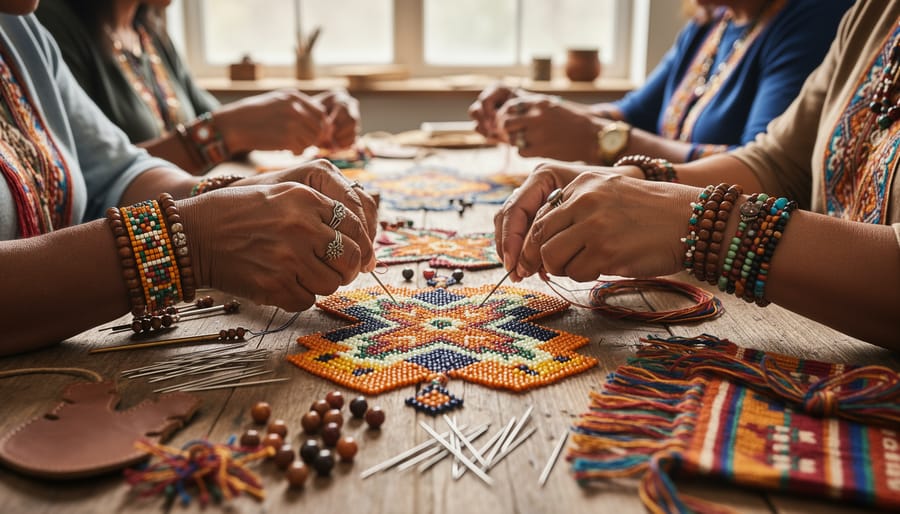
Start by remembering that “Indigenous Peoples” is not one story. First Nations, Inuit, and Métis are three distinct groups, each with its own languages, governance, traditions, and history. A Mi’kmaw community in the Maritimes, an Inuit community in Nunavut, and a Métis family on the Prairies have different ancestors, different homelands, and different ways of passing knowledge along. Treating them as one group flattens all of that.
A good first step is to pick one group, or one nation or community near you, and go deep before going wide. Indigenous-authored books are a wonderful place to begin, from memoirs and histories to poetry and children’s stories. Documentaries made by Indigenous filmmakers offer another way in, and many are free through public libraries and national broadcasters. Museums, cultural centres, and national institutions also publish learning guides, timelines, and online exhibits that are written for everyone, whatever your age or background.
As you learn, look for the full picture. Yes, it includes hard chapters, but it also includes innovation, trade, diplomacy, art, science, and leadership that shaped this country long before and long after Confederation. Resilience and contribution belong at the centre of the story, not the margins.
Finally, take a moment to learn why June was chosen for this month and how National Indigenous Peoples Day, on June 21, came to be. Knowing where an observance comes from makes taking part in it far more meaningful.
2. Attend or Support Community-Led Events and Celebrations
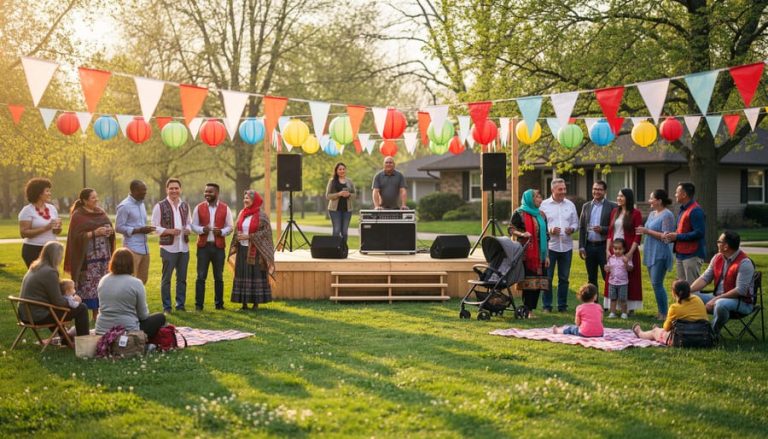
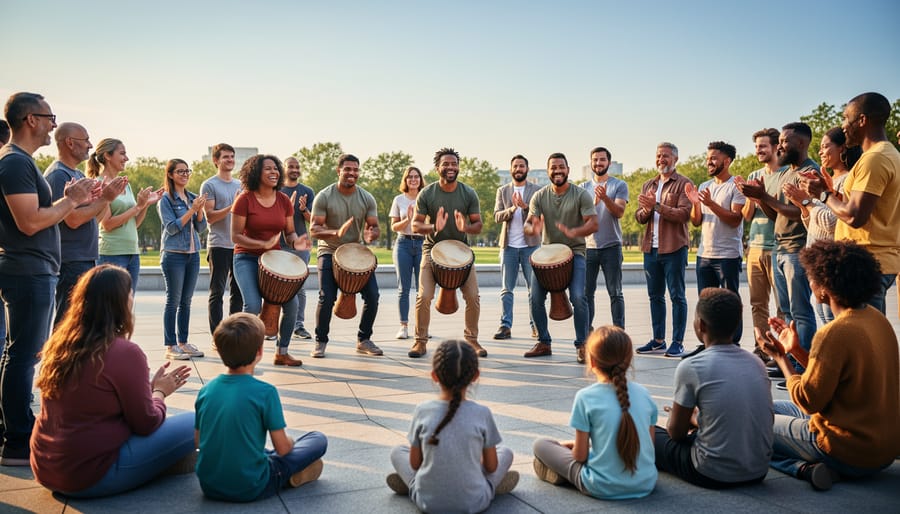
Every June, Indigenous organizations, friendship centres, cultural centres, municipalities, and schools open their doors for community-led gatherings. You’ll find powwows with drumming and dance, storytelling circles, art markets, music and dance showcases, and community feasts. Many are free and welcome everyone, which makes them a warm entry point for newcomers, families, and curious neighbours alike.
Showing up is the first step, and showing up well matters just as much. Start by reading the event details or checking with the hosts, since organizers often share guidance on where to sit, when to stand, and how to take part. During a powwow, for example, an emcee typically explains which dances are open to everyone and which are not.
Listening is a form of respect. When elders speak, a song begins, or a ceremony takes place, give your full attention and keep your phone tucked away. If you’re unsure whether something is open to guests, a quiet question to a volunteer or organizer is always welcome.
Your support can also go beyond attendance. Buy from Indigenous artists, food vendors, and craftspeople at markets, and bring a little cash in case a vendor doesn’t take cards. Ask about the stories behind the work, and stay for the conversations that happen between the dances and performances. Those moments are often where the most meaningful learning begins.
3. Read, Watch, and Listen to Indigenous Storytellers
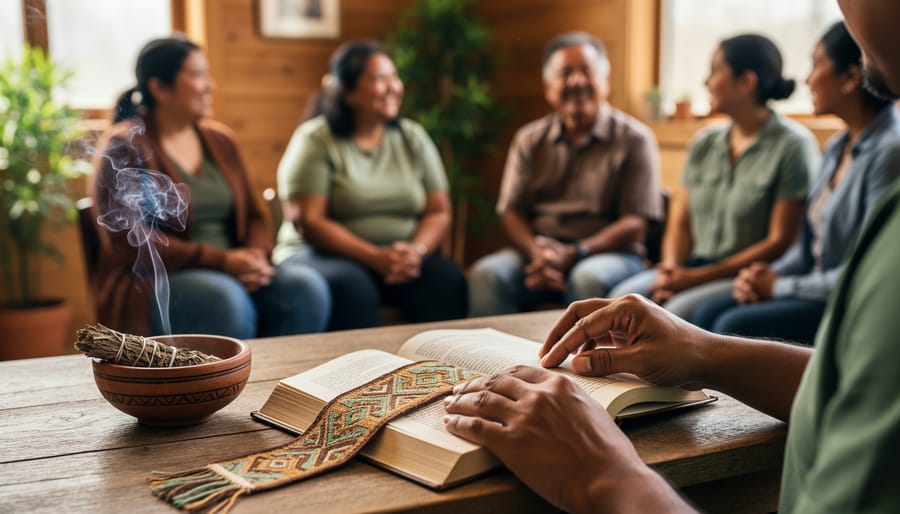
Stories are one of the most welcoming doors into Indigenous cultures, and they are meant to be shared. Indigenous authors, filmmakers, poets, musicians, podcasters, and visual artists tell stories that range from humour and everyday family life to history, language, and hopes for the future. Listening to them is learning at its most personal.
A June list doesn’t need to be long. Pick one book, one film or documentary, and one album or podcast, and let that be your starting point. Your local library is a great first stop, since librarians can often point you to Indigenous-authored titles in every age group, and many libraries offer free streaming and audiobooks. Indigenous-run publishers, radio stations, and media outlets are also worth exploring, because they put Indigenous voices at the centre rather than at the edge of the conversation.
Try to hear many voices. First Nations, Inuit, and Métis storytellers each speak from their own communities and traditions, and no single book or film can speak for everyone. A mix of perspectives, genres, and generations gives a fuller and more honest picture.
Make it a shared experience. Families can read aloud at bedtime, book clubs can dedicate a June meeting to an Indigenous author, and classrooms can pair a story with a conversation about what students noticed and what they’d like to learn next.
4. Learn About the Land You Live On and Acknowledge It Thoughtfully
A good place to begin is right where you are. Whose traditional territory is your home, school, or workplace on? Across Canada, communities sit on lands tied to First Nations, Inuit, or Métis Peoples, and many are covered by treaties or occupy territory that was never ceded. Looking this up is a simple first step, and it’s one that newcomers often find fascinating, since it adds a new layer to the place they’ve chosen to call home.
You can go further by learning the Indigenous names for local rivers, hills, and neighbourhoods, and by finding out which treaties apply in your area. Local Indigenous organizations, friendship centres, libraries, and municipal websites are often generous places to start. Building this kind of understanding is part of developing intercultural competence, the everyday ability to engage thoughtfully with people and histories different from our own.
Then there’s the land acknowledgement itself. Think of it as an opening, not a finish line. If you’re going to offer one, take time to learn what you’re saying, practise the names so you can pronounce them with care, and speak from your own understanding rather than reading words you don’t yet grasp. Better still, pair the words with something lasting, like reading a book by a local Indigenous author, supporting an Indigenous-led project, or simply staying curious.
No one expects you to get everything right on day one. Sincerity and a willingness to keep learning are what matter most.
5. Support Indigenous-Owned Businesses, Artists, and Organizations
Everyday spending is one of the most practical ways to honour the month. When you choose Indigenous artisans, entrepreneurs, caterers, speakers, and Indigenous-led charities or cultural programs, your money and attention go straight to the people carrying these stories forward. Good habits here start with good intercultural communication: ask questions with curiosity, listen closely, and treat the maker as the expert on their own work.
A few simple ways to start:
- Buy directly from Indigenous artists and businesses whenever you can.
- Ask about the maker and the community behind a product.
- Share their work with friends, colleagues, and followers.
- Return throughout the year, not just in June.
When you hire or commission, pay fair rates and respect the time and skill involved. Booking an Indigenous caterer for a team lunch or an Indigenous speaker for a community event is a fine way to put that principle into practice.
Authenticity matters, too. Mass-produced imitations of Indigenous art and crafts are common, and they take income away from real artisans. Look for the maker’s name, the nation or community they come from, and clear information about who created the piece. If a seller can’t tell you, keep looking.
The goal isn’t a one-time purchase. It’s a lasting relationship, built on trust and repeat support, that keeps Indigenous businesses and cultural programs strong long after June ends.
6. Bring the Month into Classrooms, Workplaces, and Community Groups
Bringing the month into shared spaces doesn’t need a big budget or a perfect plan. Start with one small, doable step and build from there.
In classrooms, teachers can choose age-appropriate lessons that introduce First Nations, Inuit, and Métis peoples as distinct communities with their own languages and traditions. Younger students might listen to a read-aloud by an Indigenous author, while older students can explore treaties, place names, and the story behind Indigenous Peoples Day.
Workplaces and community groups have plenty of options too. A lunch-and-learn session, a shared reading list, or a book display in the break room or library lobby gives people an easy way in. Even a short agenda item at a regular meeting can spark good conversations.
If you invite an Indigenous guest speaker, reach out early, explain what you’re hoping to learn, and offer an honorarium that respects their time and knowledge. Let them shape the conversation rather than handing them a script.
Whenever possible, weave Indigenous perspectives into programs you already run, such as newcomer welcome sessions, cultural nights, or leadership training, so the learning doesn’t feel like a one-time event.
This kind of shared learning is at the heart of Multiculturalism Canada’s mission: helping people understand one another and build connections across cultures. A few small habits started in June can easily carry on all year.
7. Keep the Learning Going Beyond June
June can spark something, but the real work happens in the eleven months that follow. Think of this month as the start of a long, rewarding friendship rather than a single event on the calendar.
One easy habit is to follow Indigenous creators, journalists, artists, and community organizations online, so their voices show up in your everyday feed instead of only in June. Local libraries, friendship centres, and cultural centres often host learning circles, talks, and workshops throughout the year, and many welcome newcomers who are simply curious. Showing up regularly matters more than showing up perfectly.
Stay open, too. You’ll hear different views from First Nations, Inuit, and Métis communities, and even within them. Listening without rushing to a conclusion is part of the learning. Over time, small and steady efforts, like asking thoughtful questions, giving credit to the people you learn from, and returning to the same communities, build trust.
Reconciliation and understanding aren’t finish lines. They’re shared journeys, and there’s room on the path for everyone in your community.
Common Questions About National Indigenous History Month
Here are quick answers to the questions people ask most often as June approaches.
What is National Indigenous History Month, and when is it?
It’s a month dedicated to recognizing the histories, cultures, and contributions of First Nations, Inuit, and Métis Peoples in Canada. It takes place every June.
How is it different from National Indigenous Peoples Day?
National Indigenous Peoples Day falls on June 21 and is a single day of celebration. The month surrounds it, giving everyone more time to learn, attend events, and build connections.
Can non-Indigenous people take part?
Yes, absolutely. The month is an open invitation to learn and listen, and joining in with respect, curiosity, and a willingness to follow Indigenous leadership is always welcome.
What’s a respectful way to ask questions?
Start with your own research, then ask with genuine curiosity and kindness. Avoid expecting any one person to speak for all Indigenous Peoples, and be ready to simply listen.
Newcomers sometimes wonder where to begin, and the good news is that the easiest steps are also the most meaningful. Visit your local library and borrow a book by an Indigenous author. Find out whose traditional territory your community is on. Attend a public, community-led gathering and take your cues from the hosts. If you’re new to Canada, these small acts are a wonderful way to understand the country you now call home and to connect with neighbours whose roots here go back thousands of years.
None of this requires expertise or a perfect plan. What matters is showing up with an open mind, staying curious, and letting each conversation teach you something new.
Final Takeaway: A Month That Belongs to Everyone Who Wants to Learn
National Indigenous History Month is an invitation, and it belongs to anyone willing to learn, listen, and connect. You might begin with a book, a community gathering, or a simple question about the land beneath your feet. Each small step helps you understand First Nations, Inuit, and Métis Peoples on their own terms.
Canada grows stronger when many stories are heard and shared. Come with curiosity and respect, bring a friend or a classroom along, and let June be the start of something that lasts all year. Every community has a place in this shared journey.