
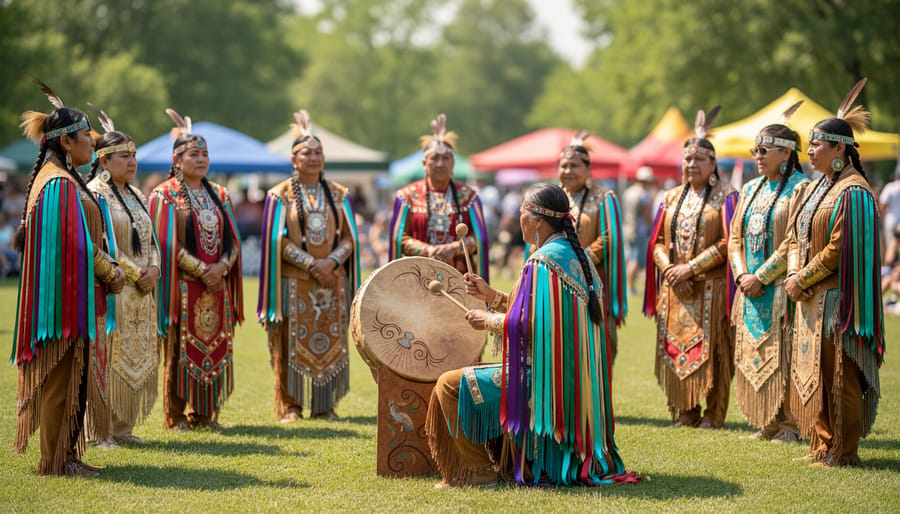
No, Indigenous Peoples Day is not a statutory holiday in Canada, which means most Canadians still go to work and school on June 21st. While it became an officially recognized federal observance in 2017 (renamed from National Aboriginal Day), employers aren’t required to give paid time off, and provincial governments set their own policies. The Northwest Territories is currently the only jurisdiction where it’s a public holiday with closures and time off.
This distinction matters because it shapes how communities across Canada choose to mark the day. Without the structure of a long weekend or guaranteed day off, celebrating Indigenous Peoples Day requires intentional participation. Yet thousands of Canadians make that choice each year, attending sunrise ceremonies, visiting cultural festivals, or simply taking time to learn about the First Nations, Inuit, and Métis peoples whose histories and contributions form the foundation of this land.
The day coincides with the summer solstice, the longest day of the year, a time many Indigenous cultures have celebrated for generations. From drumming circles in urban parks to traditional games in northern communities, the celebrations reflect the diversity of over 600 distinct First Nations and countless Inuit and Métis communities nationwide.
Whether you have the day off or not, Indigenous Peoples Day offers an opportunity to listen, learn, and build connections. The question isn’t just about holiday status. It’s about recognizing whose land we share and whose stories deserve our attention, not once a year, but every day.
Understanding National Indigenous Peoples Day: Status and Recognition
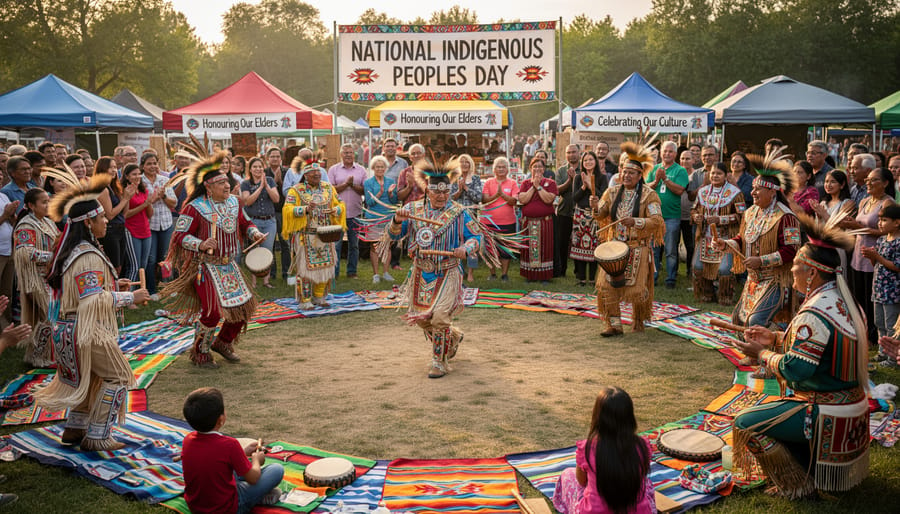
National Indigenous Peoples Day holds official recognition in Canada, but it exists in a category that trips up many people checking their calendars for time off. The federal government declared in 1996 that June 21st would be National Indigenous Peoples Day, marking it as a day to celebrate the heritage, cultures, and contributions of First Nations, Inuit, and Métis peoples. However, it’s observed, not statutory, which creates real confusion for anyone planning their week.
Here’s what that distinction actually means. A statutory holiday comes with legal requirements for most employers to give workers the day off or provide premium pay. Think Canada Day or Thanksgiving. An observed day of significance carries national recognition and encouragement to participate, but without the legal framework that guarantees time away from work or school.
The path to establishing National Indigenous Peoples Day started decades before 1996. Indigenous organizations and leaders advocated for dedicated recognition, arguing that Canada needed a specific day to honour Indigenous peoples separate from general heritage celebrations. The summer solstice date of June 21st carries particular meaning. For many Indigenous communities across the northern hemisphere, the longest day of the year has traditional significance tied to seasonal ceremonies and gatherings.
When the government made the declaration, it created space for Indigenous cultures to be celebrated publicly and gave communities a focal point for education and festivities. Schools could plan special programming. Cities could organize events. Canadians who wanted to learn more about Indigenous histories and contemporary realities had a clear date to anchor their engagement.
The observed status does present practical limits. Most Canadians still work on June 21st unless it falls on a weekend. Schools in session typically continue their regular schedule, though many incorporate special activities. Government offices generally remain open. This reality shapes how people participate in celebrations, often attending evening events or weekend gatherings scheduled near the date rather than daytime ceremonies.
The recognition nonetheless matters. It signals national acknowledgment of Indigenous peoples’ place in Canada’s story and creates momentum for the educational and cultural events that now mark the day across the country.
What This Means for Work, School, and Daily Life
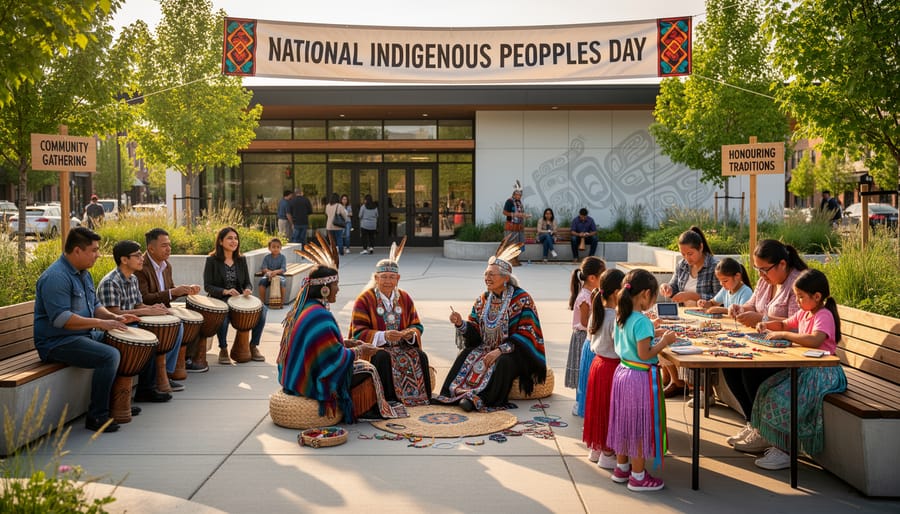
Since National Indigenous Peoples Day is not a federal statutory holiday, most Canadians don’t automatically get time off work or school on June 21st. Your typical weekday routine continues as normal unless your employer, school board, or provincial government has made specific arrangements.
The day operates more like International Women’s Day or Earth Day in this respect: widely recognized and culturally significant, but not requiring closures or paid time off by law.
How Different Sectors Handle June 21st
| Sector | Typical Status | Notes |
|---|---|---|
| Federal Government | Regular working day | Some departments allow flexible scheduling or cultural leave |
| Provincial/Territorial Governments | Varies by jurisdiction | Northwest Territories and Yukon observe it; others typically don’t |
| Private Sector | Regular working day | Growing number of companies offer cultural programming or half-days |
| Schools | Usually open | Many incorporate special assemblies, guest speakers, or cultural activities |
The Northwest Territories and Yukon stand out as exceptions. Both territories designate June 21st as an official territorial holiday, reflecting their larger Indigenous populations and the day’s particular significance in northern communities. If you live or work in these regions, you can expect closures similar to other statutory holidays.
For most Canadians elsewhere, whether you participate depends largely on your employer’s policies. Progressive workplaces increasingly offer flexible arrangements: allowing staff to attend local ceremonies, hosting lunch-and-learn sessions with Indigenous speakers, or giving employees a few hours to join community events. Federal public servants, while not getting a statutory day off, often have access to cultural leave provisions that can be applied to participate in National Indigenous Peoples Day activities.
Schools typically remain open but frequently dedicate class time to Indigenous history, invite Knowledge Keepers to speak, or organize special activities. Some school boards in areas with significant Indigenous populations may adjust schedules to allow students and families to attend major community celebrations.
How Communities Across Canada Celebrate
Stories from the Celebrations
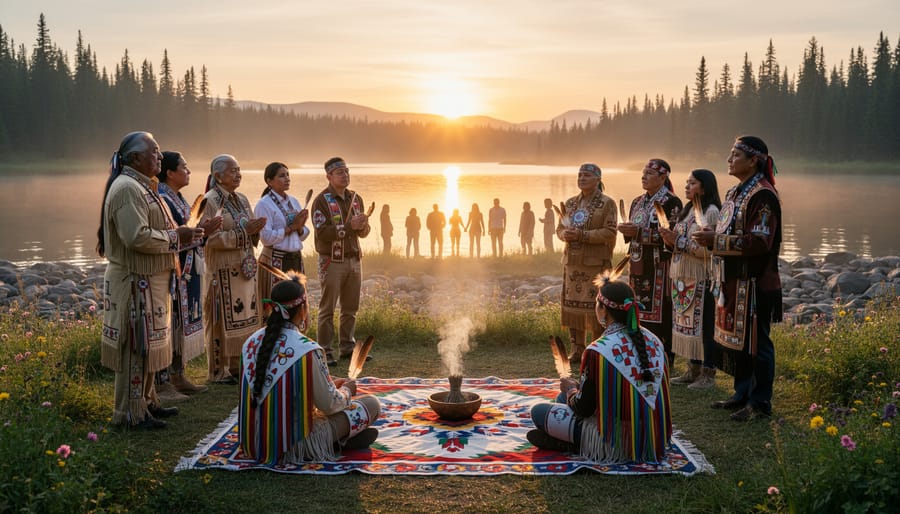
The stories from National Indigenous Peoples Day celebrations reveal a day filled with connection, learning, and joy that transcends the question of statutory holiday status.
Many celebration organizers describe the profound sense of purpose they feel bringing their communities together on June 21st. The day represents an opportunity to share traditions that residential schools once tried to erase, to speak languages that were forbidden, and to practice ceremonies that had to be conducted in secret for generations. For organizers of urban powwows and cultural festivals, seeing hundreds or thousands of people gather to celebrate Indigenous cultures publicly marks a significant shift from the marginalization their grandparents experienced.
First-time attendees often share transformative experiences. Non-Indigenous Canadians who attend their first sunrise ceremony or taste bannock for the first time at a community feast frequently express how much they did not know about the vibrant cultures that have existed on this land for millennia. Parents bring children to learn traditional dancing, watch artisans demonstrate beadwork, or listen to Elders share stories in their original languages. These moments of cultural exchange create understanding that goes beyond what any textbook can teach.
The day is about our children seeing their culture celebrated, not hidden. When they dance in regalia surrounded by thousands of people cheering them on, they understand their identity is something to be proud of.
Youth participants often describe how attending celebrations strengthens their connection to their heritage, particularly for those growing up in cities far from their home communities. For some, it is the one day each year they can wear traditional regalia in public and feel completely at home. Others talk about the friendships formed at annual gatherings, the mentors they have found, and the confidence gained from seeing their cultures valued and respected.
The recurring theme across these stories is resilience and celebration coexisting. Whether someone has the day off work or attends events in the evening, the act of showing up and participating carries meaning that extends far beyond a single date on the calendar.
Why the Holiday Status Debate Matters
The question of whether National Indigenous Peoples Day should be a statutory holiday goes far beyond scheduling and days off. For many Indigenous leaders and community members, official holiday status represents tangible recognition of Indigenous peoples’ foundational role in Canada’s past, present, and future.
When a day becomes a statutory holiday, it sends a clear message about what a country values. Canada Day is a stat holiday because we collectively recognize the importance of our nation’s formation. Victoria Day honors the constitutional monarchy. The absence of statutory status for National Indigenous Peoples Day, some argue, reveals a gap between reconciliation rhetoric and meaningful action.
“Making this a statutory holiday would give all Canadians the time and space to truly engage with Indigenous cultures, histories, and contemporary realities,” explains one advocate who has worked on this campaign for years. “Right now, many people want to attend ceremonies or learn, but they’re at work. A stat holiday removes that barrier.”
The symbolism matters equally. Several provinces already recognize National Indigenous Peoples Day as an official observance, with government offices and some businesses closing. But federal statutory status would create consistency across the country and demonstrate commitment at the highest level.
Critics of the current situation point to the contrast with Orange Shirt Day (September 30th), which became a federal statutory holiday for federal workers in 2021 following the Kamloops residential school discovery. While both days serve different purposes, the comparison highlights what’s possible when political will aligns with public sentiment.
Not everyone agrees that statutory holiday status is the most important goal. Some Indigenous voices prioritize land rights, clean water in communities, and addressing systemic inequalities over symbolic gestures. “We need both,” one community leader notes. “Recognition through a holiday matters, but it can’t be the only action.”
The debate itself reflects broader reconciliation challenges: balancing symbolic recognition with substantive change, respecting diverse Indigenous perspectives, and determining how non-Indigenous Canadians can most meaningfully support Indigenous communities.
Ways to Participate and Show Support
You don’t need the day off to participate meaningfully in National Indigenous Peoples Day. Here are concrete ways to engage, regardless of your schedule:
- Attend a local celebration or ceremony. Check your city’s events calendar for sunrise ceremonies, powwows, art markets, or cultural performances happening on June 21st. Many events run into the evening for those working during the day.
- Support Indigenous-owned businesses. Purchase artwork, crafts, books, or food from Indigenous creators and entrepreneurs. Look for local Indigenous markets or shop online through directories like Indigenous Tourism Canada.
- Learn from Indigenous voices. Read books by Indigenous authors, listen to Indigenous podcasts, or watch documentaries made by Indigenous filmmakers. The National Film Board has an excellent collection available free online.
- Participate in workplace or school recognition. If your employer or educational institution hosts activities, join in. If they don’t, suggest organizing a lunch-and-learn featuring Indigenous speakers or screening a short film.
- Donate to Indigenous-led organizations working on education, language revitalization, or youth programs in your region.
The key is understanding why it matters to show up authentically. Avoid tokenism, don’t just buy a piece of art and consider it done. Instead, make June 21st the starting point for ongoing learning and relationship-building with Indigenous communities.
Even small actions count. Share Indigenous content on social media (with proper credit), have conversations with family about Indigenous history, or simply take time to reflect on whose traditional territory you’re on and what reconciliation means in your daily life.
While National Indigenous Peoples Day isn’t a statutory holiday, that doesn’t diminish its significance or your ability to participate. June 21st offers a powerful opportunity to strengthen intercultural competence through genuine engagement with Indigenous cultures and histories. Whether you attend a sunrise ceremony, support an Indigenous artist, or simply learn something new, you’re building bridges toward reconciliation. The day’s impact grows through your participation, not its holiday status. Connect with your local Indigenous community, practice meaningful intercultural communication and help create the inclusive Canada we all want to see.






+ There are no comments
Add yours