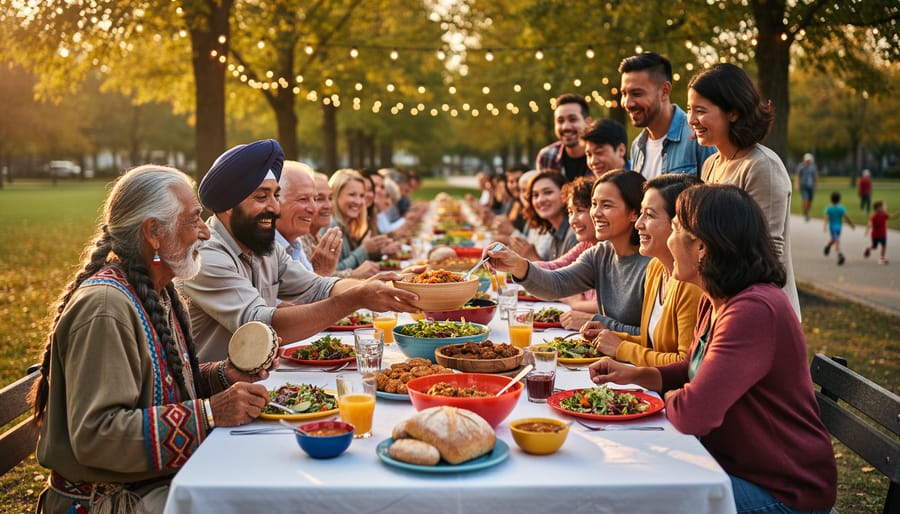
Cultural exchange in Canada happens every day, in countless small moments and grand celebrations that bring people together across difference. A Syrian newcomer shares her grandmother’s recipe at a community potluck. Indigenous drummers teach their rhythms to international students. A Sikh temple opens its doors for an interfaith dialogue. These aren’t token gestures or surface-level interactions. They’re genuine connections where people learn from each other, challenge assumptions, and build relationships that reshape communities.
Canada’s strength lies in these everyday exchanges, but what makes them meaningful? True cultural exchange moves beyond observation. It requires participation, vulnerability, and genuine curiosity. When a Filipino family invites neighbors to celebrate their first Canadian Christmas with traditional Noche Buena foods, or when a hockey coach learns about Ramadan to support Muslim players during tournaments, something shifts. People stop being statistics or strangers. They become teachers, friends, collaborators.
The examples that follow show cultural exchange across food traditions, artistic collaborations, language learning, educational programs, athletic communities, and faith-based initiatives. Some happened in large urban centers, others in small rural towns. What they share is authenticity. These stories come from real Canadians who opened themselves to new experiences and found their own perspectives expanded in return.
You’ll find practical ideas here, whether you’re new to Canada seeking connection, an educator designing programs, or simply someone curious about engaging more deeply with your neighbors.
What Makes Cultural Exchange Meaningful
Cultural exchange goes far beyond trying foods from different countries or attending a festival once a year. It happens when people from different backgrounds genuinely connect, share parts of themselves, and learn from one another in ways that reshape how they see the world. Real cultural exchange is reciprocal. It’s not about one culture performing while another watches. It’s a two-way street where everyone brings something to the table and leaves with something new.
Think about the difference between watching a YouTube video about Diwali and actually being invited into a neighbor’s home to light diyas together, hearing family stories, and understanding why this celebration matters so deeply. The first gives you information. The second changes you.
As Amira, a Syrian newcomer to Halifax, puts it: “Cultural exchange saved me from loneliness. It gave me Canadian friends who wanted to know my recipes and my language, and they shared theirs with me. We weren’t strangers anymore.”
This reciprocal learning experience stands at the heart of the Canadian Multiculturalism Act which recognizes that our communities grow stronger when we actively share and preserve our cultural heritage together.
Meaningful exchange requires certain conditions. Mutual respect comes first. You can’t genuinely learn from someone if you’re judging their traditions as inferior or exotic. Curiosity matters too, but it needs to come from a place of humility rather than entitlement to someone’s story.
Time and consistency transform surface-level interactions into real relationships. A one-off school presentation about Indigenous culture differs vastly from an ongoing partnership where Elders regularly share teachings with students. One checks a diversity box. The other builds understanding.
Breaking down barriers happens when we move past performance and into genuine relationship-building. Cultural exchange becomes meaningful when both parties feel valued, when questions are welcomed, and when differences become opportunities for connection rather than division.
Cultural Exchange Through Food and Culinary Traditions
Community Kitchen Programs
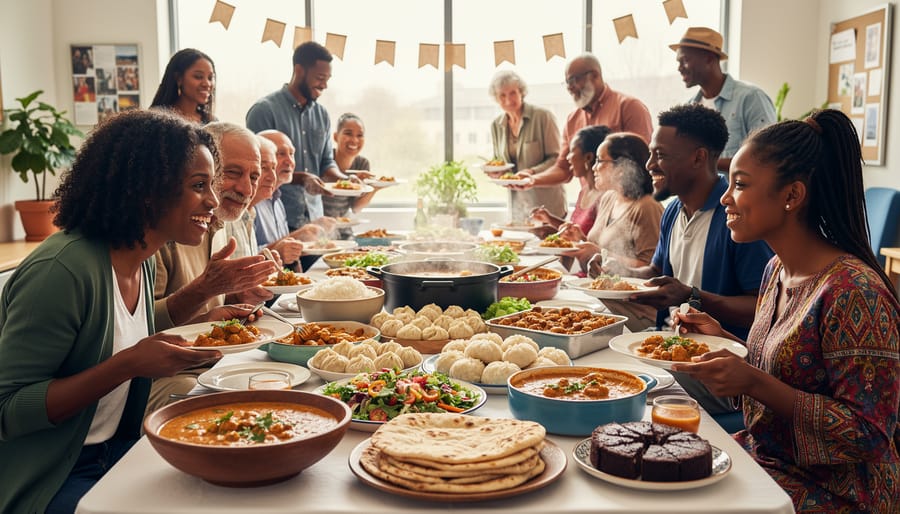
Community kitchens have become gathering places where recipes become conversation starters and cooking transforms into cultural bridge-building. At the Toronto Community Kitchen Collective, Wednesday nights bring together Syrian refugees, Filipino caregivers, and Canadian-born retirees who share counter space and family traditions. Maria, who immigrated from the Philippines in 2019, teaches others to roll lumpia while learning to make Ukrainian pierogies from her neighbor Oksana.
In Vancouver’s Sunset Community Centre, the monthly Global Potluck Kitchen pairs newcomers with volunteer hosts for collaborative cooking sessions. Last month, an Ethiopian family introduced others to injera-making, patiently explaining the three-day fermentation process while participants shared their own bread-making techniques from Lebanon, India, and Mexico. These aren’t just cooking classes. Real friendships form when people chop vegetables side by side.
The Multicultural Kitchen Project in Halifax takes a different approach, hosting themed dinners where three families each prepare part of a meal. A recent evening featured Jamaican jerk chicken, Polish cabbage rolls, and Iranian saffron rice served family-style. Children play together while parents swap ingredient tips and kitchen shortcuts.
These programs prove that food offers more than sustenance. When someone trusts you with their grandmother’s recipe, they’re sharing something precious. The steam rising from shared pots carries stories of homelands, journeys, and hopes for building new connections in Canada.
Festival Food Markets
Food festivals have become vibrant gathering places where Canadians taste, learn, and celebrate cultures from around the world. These events transform ordinary streets and parks into sensory journeys that bring communities together through shared meals and stories.
Toronto’s Night Market series at Markham illustrates this beautifully. Every summer weekend, thousands gather to sample Filipino lumpia alongside Korean corn dogs, Malaysian satay, and Trinidadian doubles. Vendors don’t just sell food. They share family recipes passed down through generations, explaining ingredients and cooking techniques to curious visitors who might never have tried these dishes otherwise.
Vancouver’s Richmond Night Market has created similar connections for over two decades. The atmosphere buzzes with conversations between longtime Canadians discovering bubble tea for the first time and newcomers excited to introduce their culinary traditions. Maria, who emigrated from El Salvador five years ago, started selling pupusas at community markets and now runs a popular stall where she teaches customers about Central American cuisine.
Montreal’s First Fridays food truck festival in the Quartier des Spectacles showcases this exchange year-round. Lebanese shawarma vendors park next to Haitian griot trucks and Quebec poutine stands. People line up together, comparing notes on flavours, swapping recommendations. These casual interactions build understanding one meal at a time.
Arts and Performance as Cultural Bridges
Collaborative Arts Projects
Art has a unique way of bringing people together, creating spaces where language barriers dissolve and new friendships take root. Across Canada, collaborative arts projects are bridging cultural divides and building vibrant, connected communities.
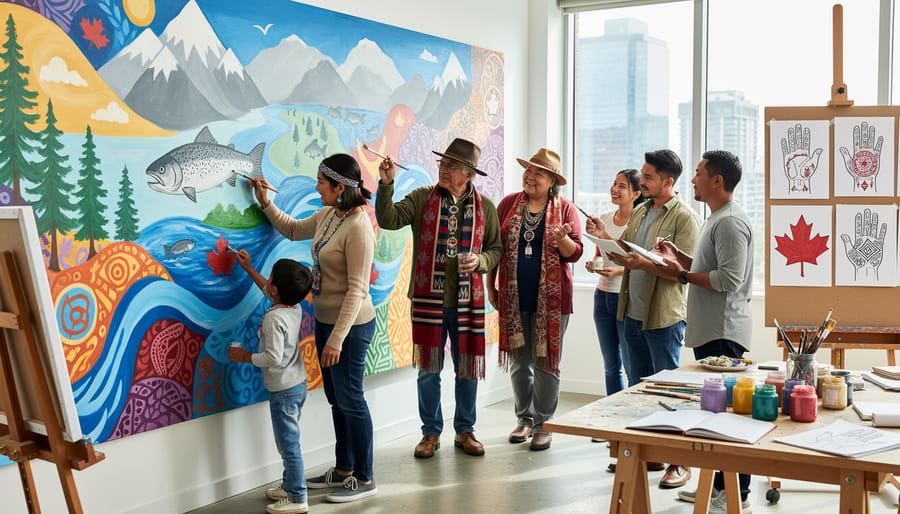
In Vancouver’s Downtown Eastside, the Urban Ink Indigenous artists collective partnered with Syrian refugee families to create a series of mixed-media installations. Elder knowledge keepers shared traditional Coast Salish weaving techniques, while newcomer artists introduced Arabic calligraphy and textile patterns from Damascus. The resulting pieces now hang in community centres throughout the city, telling stories of resilience, displacement, and hope from two distinct cultural perspectives.
Halifax’s Mosaic Dance Company brings together performers from over 15 countries. During their annual showcase, you’ll see bhangra dancers moving alongside those trained in African contemporary and Brazilian capoeira. Rehearsals become cultural exchange sessions where members teach each other not just choreography, but the stories behind every movement. One dancer from Nigeria mentioned how learning a traditional Ukrainian folk dance helped her understand a colleague’s connection to home.
Community murals have become living canvases for diverse voices. In Toronto’s Thorncliffe Park neighbourhood, residents from Pakistan, Bangladesh, the Philippines, and Somalia worked alongside local artists to paint a massive wall depicting their journeys to Canada. Each family contributed symbols, colours, and imagery representing their heritage. Children painted alongside grandparents, creating layers of meaning that passersby still stop to admire and photograph.
These projects prove that creativity speaks a universal language.
Cultural Performance Festivals
Across Canada, cultural performance festivals create vibrant spaces where communities share their heritage through music, dance, food, and art. These celebrations invite everyone to step into different cultural worlds, often within a single weekend.
Winnipeg’s Folklorama stands out as the largest and longest-running festival of its kind. For two weeks each August, the city transforms into a global village with over 40 pavilions representing cultures from every continent. Visitors travel from pavilion to pavilion, sampling Filipino lumpia at one stop, watching Ukrainian dancers at another, and learning Bollywood moves at a third. Local families volunteer to cook traditional recipes and perform folk dances they’ve practiced for months, creating an authentic experience that goes far beyond watching from the sidelines.
Toronto’s Caribana brings Caribbean culture to life every summer with a spectacular explosion of colour and rhythm. The parade draws over a million spectators who witness elaborate costumes, steel pan music, and soca dancing that stretches for kilometres along Lake Shore Boulevard. What began as a small community celebration by Caribbean immigrants in 1967 has grown into North America’s largest street festival.
Smaller communities host equally meaningful events. Vancouver’s Powell Street Festival celebrates Japanese Canadian culture, while Halifax’s Multicultural Festival showcases over 30 cultures through performances, workshops, and traditional cuisine. These gatherings create opportunities for cross-cultural friendships to form, for newcomers to share their heritage with pride, and for long-time Canadians to expand their understanding of the diverse communities around them.
Language Exchange and Conversation Circles
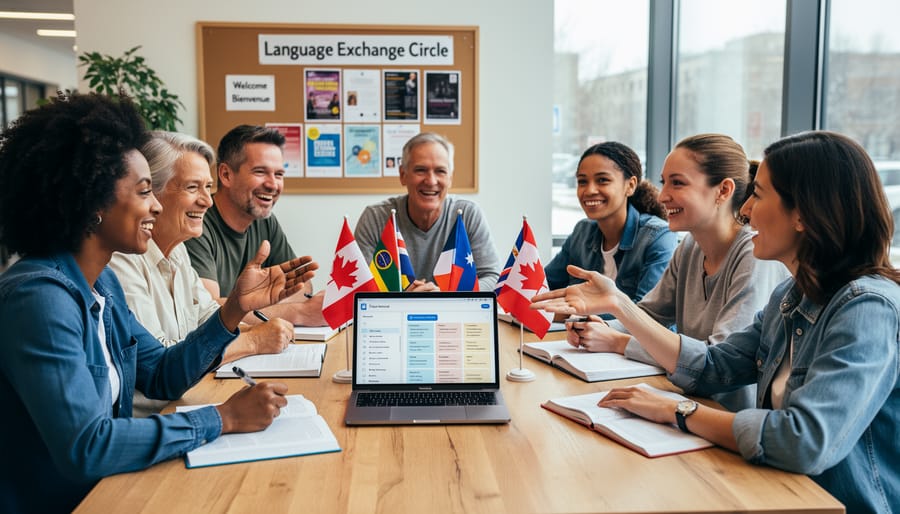
Every Tuesday evening at the Toronto Public Library’s Parliament Street branch, Maria from Colombia and David from Calgary sit across from each other, notebooks open. Maria helps David practice Spanish while he guides her through the nuances of Canadian English. These informal partnerships happen in libraries, community centers, and coffee shops across Canada, creating friendships while building language skills.
Vancouver’s Conversation Circles program, run through local settlement agencies, brings together groups of six to eight people from different backgrounds. Participants spend half the session in English conversation practice and the other half sharing stories from their home countries. Sarah, who joined to improve her facilitation skills, found herself learning about Iranian New Year traditions and teaching the group about East Coast kitchen parties. “I thought I was just volunteering,” she says. “But I’ve gained so much more than I’ve given.”
Language exchange programs take many forms across the country:
- Public library conversation clubs offering free weekly meetups for English and French practice
- University partnerships pairing international students with Canadian conversation partners
- Online language exchange circles connecting rural and urban participants through video platforms
- Informal coffee shop meetups organized through community Facebook groups and neighborhood apps
Montreal’s tandem language programs take advantage of the city’s bilingual character. Anglophones and Francophones meet regularly, splitting time between English and French. This mutual learning creates balanced relationships rather than the traditional teacher-student dynamic.
In Edmonton, the Mennonite Centre for Newcomers runs structured conversation programs where volunteers commit to meeting their language partners weekly for at least three months. The consistency builds trust and deeper cultural understanding. Volunteer Tom learned about the challenges facing refugee families while helping Ahmed prepare for job interviews. These connections matter beyond language acquisition, particularly when addressing systemic challenges newcomers face in finding employment and building networks.
The beauty of language exchange lies in its reciprocity. Nobody is just the helper or the helped. Everyone brings knowledge and leaves with something new.
Workplace and Professional Cultural Exchange
Canadian workplaces have become vibrant hubs for cultural exchange, where professionals from around the globe bring their unique experiences and perspectives to the table. These interactions happen organically through daily collaboration, but many organizations have developed structured programs that intentionally foster cross-cultural understanding.
Take mentorship initiatives at companies like TD Bank and Scotiabank, where experienced employees guide newcomers through both professional development and workplace culture. Ravi, an engineer from India, shares how his mentor at a Toronto tech firm didn’t just explain project management processes. “She taught me the unwritten rules, like how to read meeting dynamics and when it’s appropriate to challenge ideas. But I also taught her about inclusive communication styles that helped our team work better with our overseas partners.”
Diversity committees have moved beyond token representation to create real dialogue. At Vancouver General Hospital, staff members organize monthly lunch-and-learns where employees share their professional backgrounds from different countries. A nurse who trained in the Philippines demonstrated traditional healing practices that complemented modern care approaches, while a doctor from Nigeria introduced team collaboration techniques used in resource-limited settings.
International credential recognition programs show cultural exchange in action. Manitoba’s settlement agencies connect foreign-trained professionals with Canadian counterparts in their fields. Dr. Chen, a dentist from China, shadowed local practitioners while sharing advanced techniques from her training. This two-way learning enriches both parties.
Employee resource groups create space for authentic cultural sharing. At Deloitte’s offices across Canada, affinity groups celebrate heritage months not with surface-level festivities but through storytelling sessions where team members discuss how their cultural backgrounds influence their problem-solving approaches and leadership styles.
These workplace exchanges transform abstract diversity concepts into tangible benefits. When a marketing team includes perspectives from five continents, their campaigns resonate with broader audiences. The professional setting provides structure and common goals that make cultural exchange both purposeful and sustainable.
Educational Programs Connecting Communities
School-Based Cultural Exchange
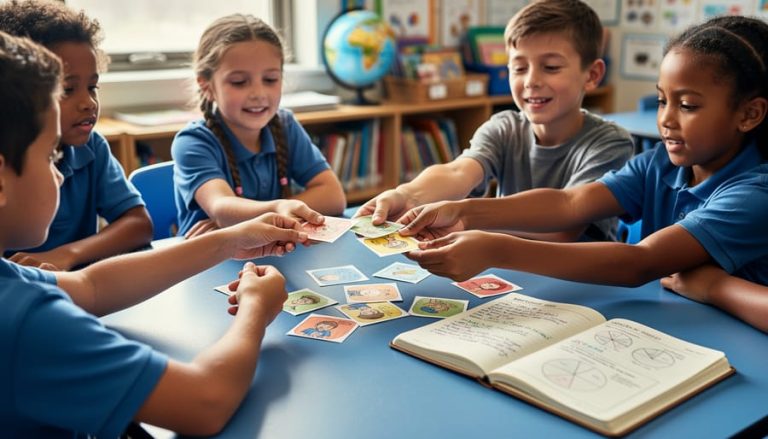
Schools across Canada are creating meaningful connections between students from different cultural backgrounds, and the impact goes far beyond textbooks. In Richmond Hill, Ontario, a Grade 4 class partnered with a school in Nunavut through a year-long pen pal program. Students exchanged letters, shared photos of their communities, and learned traditional stories from each other’s cultures. The surprise? Many southern students had never considered what life looks like above the Arctic Circle, while their Nunavut peers gained insights into suburban multicultural communities.
Cultural heritage days have become annual highlights in schools from Vancouver to Halifax. At École élémentaire publique Gisèle-Lalonde in Ottawa, students spend weeks preparing presentations about their family backgrounds. One year, a student from a Filipino family taught classmates a traditional Tinikling bamboo dance during recess. By lunchtime, kids from Iranian, Somali, and Italian families were all trying the steps together.
Virtual classroom partnerships are opening new doors too. A high school in Saskatoon connected with a school in Cape Breton for monthly video discussions about regional cultures, discussing everything from Métis beadwork traditions to Celtic music heritage. These exchanges create space for building understanding through genuine curiosity rather than assumptions.
The beauty of school-based exchanges? They normalize diversity early. Students learn that different doesn’t mean difficult, and that everyone has stories worth sharing.
Post-Secondary International Student Programs
Canadian campuses have become vibrant hubs where students from across the globe connect through structured exchange programs. At the University of British Columbia, the Global Buddies program pairs incoming international students with domestic peers who help them navigate everything from course registration to finding the best study spots. These partnerships often evolve far beyond practical logistics. Sarah, a student from Ontario, recalls how her buddy from Malaysia introduced her to traditional Hari Raya celebrations, while she shared her family’s apple-picking traditions in the Okanagan.
Many colleges now train cultural ambassadors who lead orientation sessions, host conversation circles, and organize cross-cultural events throughout the year. At Toronto Metropolitan University, student ambassadors create monthly potluck dinners where everyone brings dishes that tell their family stories. These gatherings become safe spaces for sharing experiences about adaptation, homesickness, and the excitement of building new friendships.
Some programs focus on language exchange, pairing students who want to practice English or French with those learning Mandarin, Punjabi, or Arabic. The reciprocal nature means everyone teaches and learns. Through these connections, students gain more than language skills. They develop lasting friendships and discover how their different perspectives enrich classroom discussions and campus life.
Sports and Recreation as Common Ground
Sports have this uncanny ability to dissolve barriers. You might not speak the same language as the person beside you, but when you’re both cheering for the same goal or working together to set up a volleyball net, those differences fade into the background.
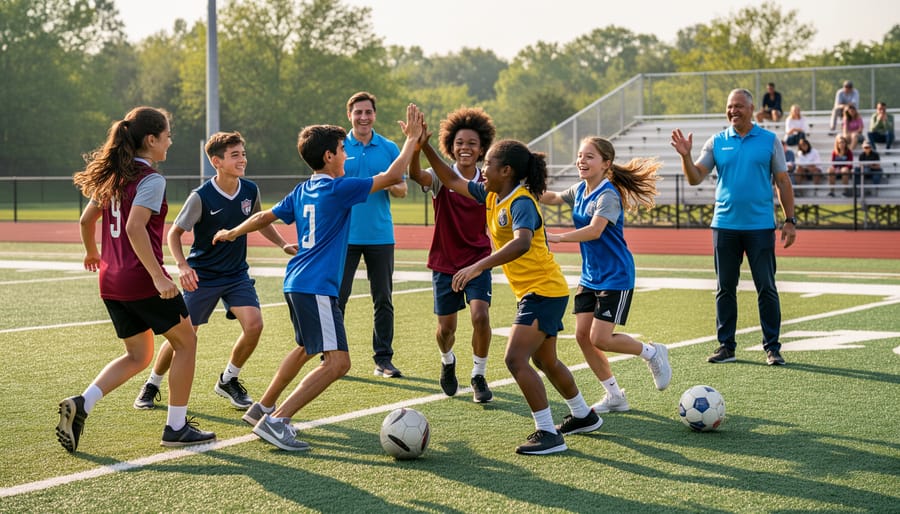
Take the story of a community soccer league in Surrey, British Columbia. What started as a small group of dads kicking a ball around on Sunday mornings has grown into a multicultural tournament drawing teams from Filipino, Punjabi, Iranian, and Latin American communities. Players range from recent arrivals to third-generation Canadians, all united by their love of the game. After matches, families gather for potluck lunches where samosas sit alongside empanadas and homemade pierogies. The field becomes a meeting place where friendships form naturally, kids play together, and parents exchange phone numbers.
Community recreation centres across Canada tell similar stories. In Halifax, a newcomer swimming program pairs experienced swimmers with families new to Canada, many of whom never had access to pools in their home countries. Volunteers don’t just teach strokes and water safety. They explain locker room etiquette, help navigate registration systems, and often become the first friendly faces newcomers recognize in their neighbourhood.
Winter activities create unique opportunities too. Indigenous-led snowshoeing programs in Winnipeg welcome participants from all backgrounds to learn traditional practices while exploring urban trails. A skateboarding collective in Montreal brings together youth from diverse neighbourhoods, teaching tricks while building respect across linguistic and cultural lines.
Dragon boat teams have become particularly powerful spaces for connection. Crews require synchronization and trust, forcing paddlers to communicate and rely on each other regardless of where they’re from. Many teams intentionally recruit diverse members, creating floating communities where cultural exchange happens naturally, stroke by stroke.
Faith and Interfaith Dialogue Initiatives
In cities and towns across Canada, faith communities are stepping beyond their own walls to learn from one another. These interfaith initiatives transform what could remain separate spiritual paths into opportunities for genuine connection and mutual respect.
The Noor Cultural Centre in Toronto regularly hosts open-house events where Muslim community members invite neighbours of all backgrounds to share meals, ask questions, and learn about Islamic traditions. Sarah Chen, who attended with her Buddhist parents, recalls feeling nervous at first. “But within minutes, we were laughing over tea and discovering how much our values around family and compassion overlapped,” she says. These gatherings have become so popular that other mosques, synagogues, churches, and temples have started similar programs.
Vancouver’s Multifaith Action Society brings together leaders from over 20 different faith traditions to address community needs together. They’ve organized shared service projects, from preparing meals at homeless shelters to environmental cleanup initiatives. Reverend Michael Thompson worked alongside Sikh volunteers at a recent food bank drive. “We discovered that serving others is central to both our traditions. That common ground made us friends, not just volunteers.”
In Calgary, the Abraham Festival celebrates the shared roots of Judaism, Christianity, and Islam through music, storytelling, and dialogue sessions. High school students participate in panel discussions where they explore both differences and similarities in their beliefs. These conversations have rippled outward, with participants creating inclusive communities in their own schools and neighbourhoods.
Winnipeg’s Indigenous-led Sacred Circle gatherings welcome people from various spiritual backgrounds to participate in traditional ceremonies with proper guidance and respect. Elder Margaret Blackbird explains that these gatherings teach non-Indigenous participants about First Nations spirituality while honouring protocol. “Understanding comes from experience, not just reading about it.”
These faith-based exchanges prove that opening doors leads to opening hearts.
Getting Involved in Cultural Exchange
The beauty of cultural exchange is that you don’t need a passport or a formal program to participate. Right in your own neighbourhood, opportunities exist to connect across cultures, learn from others, and share your own heritage. The key is approaching these connections with genuine curiosity and respect.
Getting started can feel easier when you have a clear pathway. Here are some practical steps to begin your cultural exchange journey:
- Research local multicultural organizations, cultural associations, and community centres in your area. Many cities have cultural hubs representing specific communities that welcome participation from people of all backgrounds.
- Attend public multicultural events like heritage festivals, cultural celebrations, or community potlucks. These gatherings are specifically designed to bring people together.
- Volunteer with organizations that serve diverse populations, whether that’s helping with language programs, assisting at settlement services, or supporting cultural events.
- Start conversations with neighbours, coworkers, or classmates from different backgrounds. Ask about their experiences, traditions, or favourite foods. Most people appreciate genuine interest.
- Stay open to learning and unlearning. Be ready to acknowledge when you don’t know something and willing to hear perspectives that might challenge your assumptions.
Consider what you can offer too. Maybe you’re skilled at a craft, speak a language, or have knowledge about a particular tradition. Cultural exchange works best as a two-way street where everyone both teaches and learns.
Ranjit from Edmonton shares his approach: “I started hosting monthly dinners where everyone brings a dish from their heritage and tells the story behind it. We’ve had Syrian muhammara, Filipino lumpia, Ukrainian borscht, and Nigerian jollof rice at the same table. The conversations that happen over these meals have created friendships I never expected.”
Remember that mistakes happen. You might mispronounce a word, misunderstand a custom, or accidentally say something insensitive. What matters is how you respond: apologize sincerely, listen to feedback, and keep learning. The willingness to show up despite imperfection often matters more than getting everything right.
Cultural exchange thrives on authenticity. Approach it not as a checkbox activity but as an ongoing relationship with the diverse communities that make up the Canadian experience.
Cultural exchange isn’t something that happens in the background of Canadian life. It’s the very foundation of who we are as a country, and it grows stronger every time we choose connection over separation.
When Priya shares her family’s Diwali traditions with her neighbour Maria, or when Ahmed teaches his co-workers a few phrases in Arabic, they’re doing more than sharing information. They’re building bridges of understanding that make our communities genuinely welcoming spaces. These small moments accumulate into something powerful: a more inclusive society where differences become sources of strength rather than division.
The beautiful thing about cultural exchange is that it doesn’t require grand gestures or formal programs. Yes, community festivals and school exchanges play valuable roles, but transformation also happens over potluck dinners, playground conversations, and shared projects. Every interaction where we genuinely listen and share creates ripples of empathy.
So what’s your next step? Maybe it’s attending a cultural event you’ve never experienced before. Perhaps it’s striking up a conversation with someone whose background differs from yours. You might volunteer with a newcomer settlement organization or simply invite a neighbour to share a meal. The specific action matters less than the intention behind it.
Canada’s multicultural fabric doesn’t weave itself. It requires all of us, thread by thread, choosing curiosity over assumptions and openness over fear. Your story, your traditions, your willingness to learn from others contributes something irreplaceable to our collective identity. Start small, start today, and watch how those connections transform both your community and yourself.