Canada has long celebrated its reputation as a multicultural mosaic, a welcoming nation built on diversity and inclusion. Yet beneath this proud identity lies an uncomfortable truth that demands our attention: racism exists here, woven through our institutions, communities, and daily interactions in ways both obvious and subtle.
From the historical injustices faced by Indigenous peoples to the ongoing discrimination experienced by Black Canadians, Asian communities, and other racialized groups, our nation’s story includes chapters we cannot ignore. Recent years have brought these realities into sharper focus. The killings of George Floyd and Joyce Echaquan sparked nationwide conversations. Anti-Asian hate crimes surged during the pandemic. The discoveries at residential school sites reminded us that reconciliation remains unfinished work.
But this isn’t simply a story of problems. Across the country, Canadians are choosing action over silence. Grassroots organizations are building bridges between communities. Educators are reimagining curricula to reflect diverse histories. Workplaces are examining their practices through equity lenses. Young people are demanding accountability from leaders and institutions.
Understanding racism in Canada means acknowledging both its persistence and the powerful movements working to dismantle it. It requires us to listen to the lived experiences of those who face discrimination, to examine how systems perpetuate inequality, and to recognize our own role in creating change.
This article explores the current landscape of racism in Canada through the voices of those affected, the advocates fighting for justice, and the practical steps each of us can take. Because building a truly inclusive Canada isn’t just possible—it’s already happening, one community at a time.
The Reality Behind the Mosaic: Understanding Racism in Canada Today
What Racism Looks Like in Canadian Communities
Racism in Canadian communities doesn’t always arrive with dramatic announcements. Often, it shows up in quiet moments that leave lasting impressions. Take Amira’s story, for instance. She’s a software engineer who moved to Toronto from Egypt five years ago. Despite her qualifications, she’s watched colleagues with similar experience advance while her applications for senior positions go unanswered. When she finally asked for feedback, her manager suggested she work on her “cultural fit” with the team.
Then there’s Marcus, a Black father in Halifax whose teenage son was stopped by police three times in one month while walking home from basketball practice. Each time, officers asked where he was going and what he was doing in the neighborhood where his family has lived for generations.
In Vancouver, Priya, a third-generation Canadian of Indian descent, still gets asked “Where are you really from?” when meeting new people. The question, though seemingly innocent, sends a subtle message that she doesn’t quite belong, despite her family’s deep roots in the country.
Indigenous communities face particularly persistent challenges. Sarah, a Cree woman working in Edmonton’s healthcare sector, shares how patients have requested different nurses simply because of her background. In schools, Indigenous students report seeing little of their history and culture reflected in curriculum, while facing lower expectations from some educators.
These aren’t isolated incidents happening to a few unlucky individuals. Recent surveys show that nearly half of visible minorities in Canada have experienced discrimination. It happens in job interviews when names that sound “too ethnic” lead to fewer callbacks. It appears in housing searches when landlords suddenly have no vacancies. It emerges in stores where security guards follow certain shoppers more closely than others.
Understanding these everyday experiences helps us recognize that addressing racism requires attention to both systemic issues and personal interactions that shape our communities.
The Numbers Tell a Story
While Canada prides itself on diversity and inclusion, the numbers reveal disparities that deserve our attention and action. Understanding these statistics helps us recognize where we need to focus our collective efforts.
Employment and income data show significant gaps. Statistics Canada reports that racialized Canadians earn, on average, 75 cents for every dollar earned by non-racialized workers, even when education and experience levels are comparable. For Black Canadians specifically, this gap widens further, with many families earning substantially less than the national median income.
The justice system reflects troubling patterns too. Indigenous peoples, who make up roughly 5% of Canada’s population, account for over 30% of federal inmates. Black Canadians are incarcerated at rates three times higher than their population share would suggest. These numbers point to systemic issues within policing and sentencing practices that many communities have experienced firsthand.
Housing affordability affects racialized families disproportionately, with studies showing they’re more likely to live in overcrowded conditions or spend more than half their income on rent. Access to homeownership remains particularly challenging for newcomer families and racialized communities.
Healthcare outcomes also vary. During the pandemic, racialized communities experienced higher infection and mortality rates, partly due to working in essential services and living in multi-generational households.
These statistics aren’t just numbers—they represent real families, dreams deferred, and potential untapped. But they also show us exactly where change is needed most, helping communities and allies direct their energy toward creating meaningful impact.
Voices Rising: How Canadians Are Fighting Back
Community-Led Initiatives That Are Making a Difference
Across Canada, communities are coming together to create meaningful change through grassroots initiatives that challenge racism and celebrate diversity. These efforts show that when people unite with purpose, they can transform neighbourhoods, workplaces, and entire cities.
In Toronto, the Black Youth Helpline has expanded its mentorship programs, connecting young people with role models who understand their lived experiences. Their peer support groups have become safe spaces where participants share stories, build confidence, and develop leadership skills. Similarly, Vancouver’s Hogan’s Alley Society works to preserve Black history while creating opportunities for cultural education through walking tours and community gatherings that bring diverse groups together.
Indigenous-led initiatives like the Gord Downie & Chanie Wenjack Fund are fostering reconciliation through arts and education. Their Legacy Rooms in schools across the country spark difficult but necessary conversations about residential schools, helping younger generations understand this painful chapter while inspiring action toward healing.
The Mosaic Institute organizes interfaith dialogues that bring Canadians from different religious backgrounds together over shared meals and honest conversations. Participants often describe these encounters as eye-opening, breaking down assumptions they didn’t realize they held.
Community festivals also play a vital role. Halifax’s Africville Reunion brings thousands together annually to honour Black Nova Scotian heritage, while Winnipeg’s Folklorama showcases over 40 cultures through food, dance, and storytelling. These celebrations do more than entertain; they educate and build bridges between communities.
On social media, campaigns like hashtag StopAsianHate mobilized thousands of Canadians to stand against discrimination during the pandemic. Local groups organized neighbourhood walks, where volunteers accompanied seniors to help them feel safe while running errands.
These initiatives prove that change doesn’t always require massive resources. Sometimes, it starts with neighbours showing up for one another, creating spaces for dialogue, and refusing to let prejudice go unchallenged.
Stories of Change: Real People, Real Impact
When Amira moved to Toronto from Sudan five years ago, she encountered subtle racism in her workplace that left her feeling isolated. Today, she leads diversity workshops at her company, training over 300 employees annually. “I realized that many people simply didn’t know how their words affected others,” she shares. “Once we started having honest conversations, real change began to happen.”
In Halifax, high school teacher Marcus Chen noticed his Black and Indigenous students rarely saw themselves reflected in the curriculum. He worked with colleagues to integrate diverse Canadian voices into lesson plans, from Indigenous scientists to Black entrepreneurs who shaped Canadian history. “My students now understand that Canadian history includes their stories too,” he says. The shift has been remarkable—students report feeling more connected to their learning and more confident in class discussions.
Community organizer Jaspreet Kaur transformed her Winnipeg neighborhood through monthly cultural potlucks where families share food, stories, and traditions. What started with twelve families now includes over 200 participants from 30 different countries. “We’re not just eating samosas and bannock together,” Jaspreet laughs. “We’re building genuine friendships and understanding. When racist incidents happen in our community, we now have allies who stand together.”
In Vancouver, Indigenous elder Mary Blackwater partners with newcomer settlement organizations to help recent immigrants understand the land’s original peoples. “Reconciliation includes everyone who calls Canada home now,” she explains. Her workshops create space for newcomers to learn about Indigenous history while sharing their own experiences with discrimination, building unexpected connections.
These stories remind us that change doesn’t always require grand gestures. Sometimes it starts with one conversation, one classroom, or one potluck dinner at a time.
Building Bridges: Education and Awareness Programs Across Canada
What Schools Are Teaching Our Children
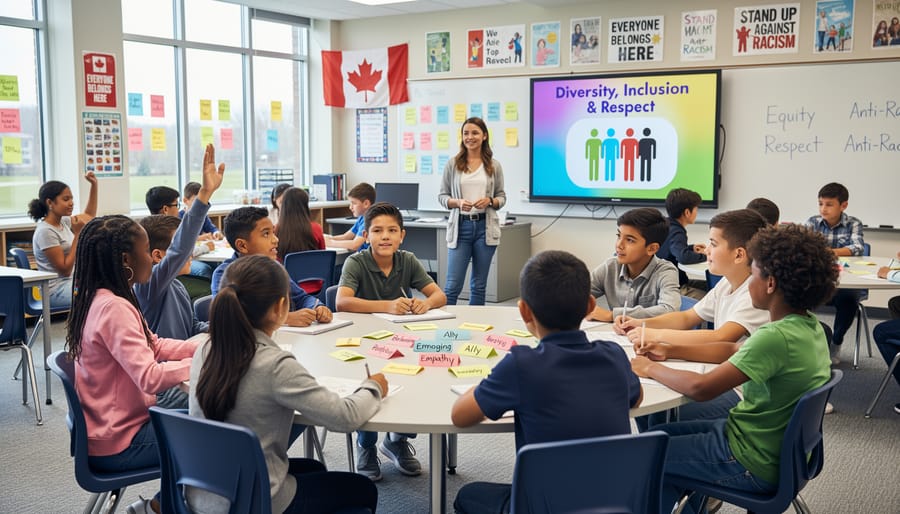
Across Canada, classrooms are becoming spaces where young people engage with the full complexity of our country’s history and present. Provincial curricula are evolving to include more comprehensive Indigenous history, moving beyond single lessons to integrated learning throughout the school year. Students in British Columbia, for example, now learn about residential schools starting in elementary grades, with age-appropriate content that acknowledges both historical harms and Indigenous resilience.
Many schools have introduced mandatory anti-racism education programs that go beyond surface-level discussions. Teachers are incorporating diverse voices into literature classes, ensuring students see themselves reflected in the books they read. Social studies courses now examine systemic racism and its impacts on different communities, encouraging critical thinking about fairness and justice.
Indigenous language programs are expanding in schools nationwide, with some provinces offering Cree, Ojibwe, or Inuktitut classes. These initiatives help preserve endangered languages while teaching all students to value Indigenous cultures. Students participate in land-based learning, connecting with Indigenous knowledge keepers who share traditional teachings about relationships with the land and each other.
Teachers receive professional development on culturally responsive teaching practices, learning to create inclusive classroom environments where every student feels valued. Student-led diversity clubs organize cultural celebrations, awareness campaigns, and peer education initiatives that build understanding across differences. Parents notice their children coming home with questions that spark important family conversations about respect, equity, and belonging. These educational shifts represent investments in a generation that will hopefully navigate diversity with greater empathy and understanding than previous ones.
Workplace Programs That Actually Work
Real change in Canadian workplaces isn’t happening through one-off diversity seminars anymore. Organizations are discovering that meaningful anti-racism work requires sustained commitment and creative approaches that actually resonate with employees.
Take the story of a Vancouver tech company that replaced their annual diversity workshop with quarterly “story circles.” Employees from different cultural backgrounds share personal experiences over lunch, creating genuine connections rather than checking boxes. Within a year, they saw increased collaboration across departments and employees reporting they felt more comfortable bringing their whole selves to work.
In Toronto, a healthcare organization partnered with local community leaders to develop culturally-responsive training that addresses specific scenarios their staff encounters. Instead of generic presentations, employees learn through role-playing real situations, like supporting patients who’ve experienced discrimination or navigating language barriers with empathy.
What sets these programs apart? They’re ongoing rather than one-time events, they involve employees in shaping the content, and they create space for honest, sometimes uncomfortable conversations. One Calgary manufacturing plant introduced employee-led “lunch and learn” sessions where workers teach colleagues about their cultural traditions and discuss workplace challenges they face.
The most successful programs also measure impact beyond attendance sheets. They track promotion rates across different groups, conduct regular climate surveys, and most importantly, they listen when employees identify problems and empower them to develop solutions. These workplaces recognize that dismantling racism isn’t a workshop—it’s a continuous journey that requires everyone’s participation.
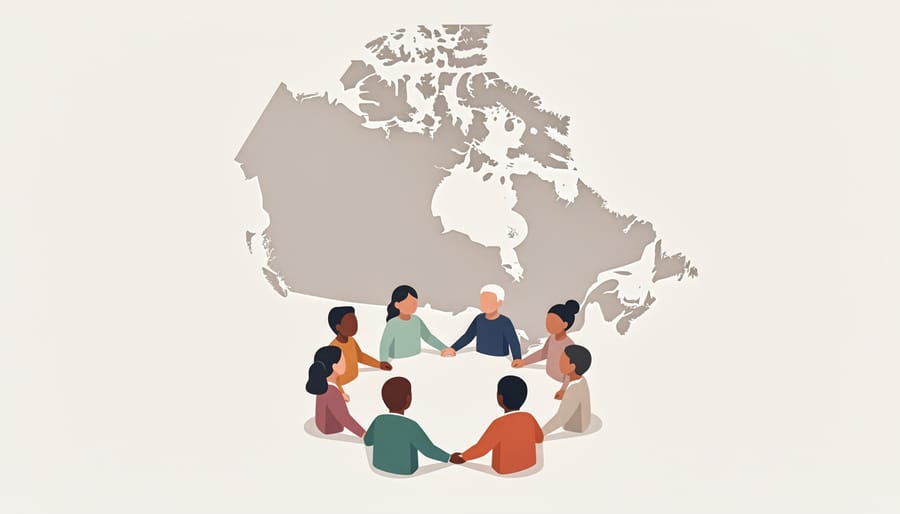
Your Role in the Movement: Practical Ways to Stand Against Racism
Small Actions That Create Big Ripples
Change doesn’t always require grand gestures. Sometimes the most powerful anti-racism work happens in everyday moments, through small but intentional actions that create meaningful ripples in our communities.
Start with your social circles. When you hear a racist joke or stereotype, speak up gently but firmly. You might say, “I don’t think that’s funny” or “That doesn’t match my experience with that community.” Your voice matters, especially when it comes from within trusted relationships.
Make your consumer choices count. Support businesses owned by racialized Canadians in your neighborhood. Share their services on social media. Write positive reviews. Economic empowerment is a practical form of allyship that directly impacts families and communities.
Diversify what you consume. Read books by Indigenous, Black, and racialized Canadian authors. Follow social media accounts that share perspectives different from your own. Watch films that tell stories beyond the mainstream narrative. This isn’t about checking boxes; it’s about genuinely expanding your understanding of the Canadian experience.
In your workplace or school, question why certain voices are missing from the table. Advocate for diverse hiring practices and inclusive curricula. Mentor someone from an underrepresented community.
Listen more than you speak when racialized Canadians share their experiences. Resist the urge to defend or explain away their reality. Sometimes the most powerful action is simply believing someone’s story and letting it change you.
These small actions, multiplied across communities, create the foundation for lasting change.
Getting Involved in Your Community
Making a difference starts right in your own neighborhood, and there are more opportunities than you might think to become part of the solution to racism in Canada.
Start by researching local anti-racism organizations in your area. Many cities have community groups dedicated to promoting diversity and combating discrimination. Organizations like the Canadian Centre for Diversity and Inclusion, local chapters of Black Lives Matter, Indigenous friendship centres, and newcomer support services often welcome volunteers and participants. A simple online search or visit to your community centre can connect you with groups doing meaningful work.
Attending community events is another powerful way to get involved. Cultural festivals, Indigenous awareness workshops, Black History Month celebrations, and interfaith gatherings provide opportunities to learn, listen, and build relationships across different communities. These events help break down barriers and create spaces where diverse voices are celebrated.
Consider joining or forming discussion circles in your workplace, school, or faith community. Many Canadians have found that honest conversations about race, privilege, and systemic barriers lead to greater understanding and concrete action plans. Libraries often host book clubs focused on anti-racism literature, providing safe spaces to explore difficult topics together.
Volunteering with newcomer settlement agencies offers hands-on opportunities to support those facing discrimination while adjusting to life in Canada. Whether it’s helping with language practice, job search support, or simply being a friendly face, your involvement makes a tangible difference.
Remember, getting involved doesn’t always mean grand gestures. Supporting racialized-owned businesses, speaking up when you witness discrimination, and amplifying marginalized voices on social media are all valuable contributions. The key is taking that first step, however small, and committing to ongoing learning and action.
Standing at this moment in Canada’s journey, we find ourselves at a powerful crossroads. Yes, racism remains a reality that touches too many lives across our communities. But here’s what fills us with genuine hope: every day, more Canadians are choosing to stand up, speak out, and take meaningful action. From Vancouver to Halifax, from Indigenous communities in the North to newcomer settlement services in our cities, people are building bridges instead of walls.
The truth is, change doesn’t happen in isolation. It happens when a teacher redesigns their curriculum to include diverse voices. It happens when neighbors organize cultural celebrations that bring everyone together. It happens when workplaces implement genuine equity policies, and when young people challenge outdated thinking at family dinners. These seemingly small acts accumulate into something transformative.
What makes Canada’s anti-racism movement particularly inspiring is its diversity. Indigenous leaders are reclaiming their narratives and educating others about truth and reconciliation. Black Canadians are creating spaces where their histories and contributions are celebrated. Asian, Middle Eastern, and Latin American communities are sharing their stories and building coalitions. And crucially, allies from all backgrounds are using their voices and platforms to amplify marginalized perspectives.
This collective effort is already producing results. We’re seeing policy changes, increased representation in media and leadership, and more honest conversations about race in schools and workplaces. Community organizations are receiving more support, and young people are growing up with greater awareness and empathy than previous generations.
Your role in this movement matters, regardless of where you’re starting from. Whether you’re educating yourself, having difficult conversations, supporting advocacy organizations, or simply treating everyone with dignity and respect, you’re contributing to a more inclusive Canada. The path forward requires all of us, bringing our unique experiences and perspectives to the table.
Our diversity isn’t just something to tolerate; it’s our greatest strength. When we embrace it fully, acknowledging past harms while building toward a better future, we create a Canada that truly belongs to everyone. The work continues, but together, we’re proving that hope backed by action can reshape our nation.