
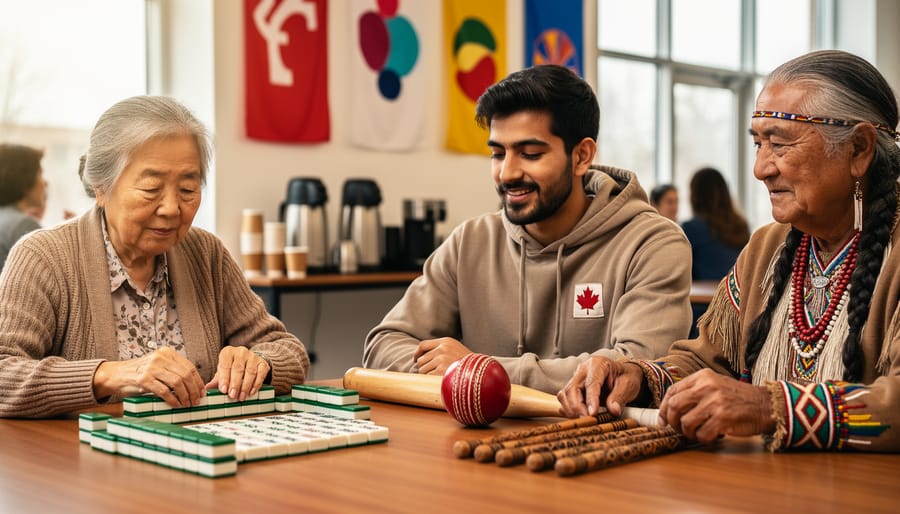
Across Canada’s multicultural landscape, a grandmother in Richmond might view mahjong gambling as cherished tradition, while a newcomer from Pakistan sees cricket betting through the lens of community celebration, and an Indigenous elder recognizes the deep cultural distinction between traditional games of chance and modern cassino bet platforms. These varied perspectives reveal how our relationship with games and sports betting is shaped not by a single Canadian viewpoint, but by the rich tapestry of cultural experiences, religious teachings, and community values that newcomers and long-established residents bring to this country.
Understanding these diverse attitudes matters now more than ever. As online betting becomes increasingly accessible and sports gambling gains mainstream acceptance, communities across Canada are navigating questions about entertainment, risk, tradition, and values in distinctly different ways. What one culture celebrates as social bonding, another may view with caution or concern. What feels like harmless fun to some families represents serious ethical considerations to others.
This exploration invites you into the living rooms, community centers, and gathering places where Canadians from different backgrounds share their stories about games, chance, and choice. Through these authentic voices, we’ll discover how cultural heritage influences modern attitudes toward betting, how families pass down wisdom about risk and responsibility, and how understanding these perspectives strengthens our collective fabric as a nation built on respect and inclusion.
The Cultural Roots of Gaming: Where Traditions Meet Modern Betting
Games of Chance Across Continents
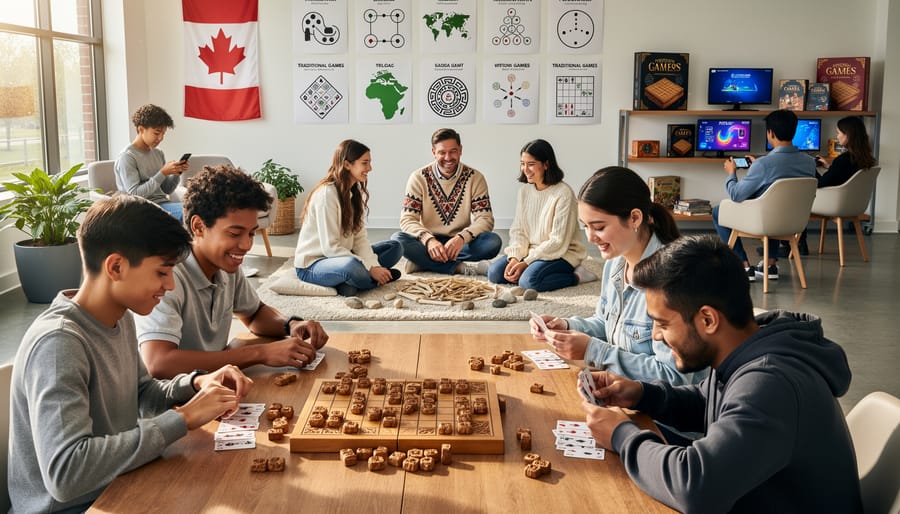
Games have always brought people together, and across cultures, the element of chance has added excitement to gatherings for centuries. When newcomers arrive in Canada, they often bring cherished gaming traditions that reflect their heritage and values. Understanding these practices helps us appreciate how diverse cultural perspectives shape contemporary attitudes toward betting and gaming in our communities.
In Chinese-Canadian households, mahjong represents far more than a simple tile game. Families gather around tables, the clicking of tiles creating a familiar soundtrack to celebrations and weekend visits. While some play purely for enjoyment, others incorporate small wagers that make victories sweeter. “My grandmother taught me mahjong when I was twelve,” shares Vancouver resident Lin Chen. “The betting was never about money, really. It was about pride, strategy, and keeping your mind sharp.” This cultural practice, brought from generations past, demonstrates how gaming with stakes can serve social and cognitive purposes within communities.
Cricket betting holds similar significance for many South Asian Canadians. The sport itself carries deep cultural meaning, and friendly wagers during matches create additional layers of engagement. Community centers in Toronto and Brampton often host cricket viewing parties where spirited discussions about team performance naturally lead to predictions and occasional bets among friends. These practices mirror Indigenous gaming traditions that historically combined entertainment, skill demonstration, and community bonding.
Card games like poker, rummy, and baccarat transcend cultural boundaries while maintaining unique significance in different communities. Filipino-Canadian families might gather for pusoy dos tournaments, while Italian-Canadian clubs host scopone competitions. Each tradition carries its own etiquette, strategies, and attitudes toward wagering.
These traditional practices inform how various communities approach modern sports betting platforms. Understanding cultural context helps explain why gaming isn’t uniformly viewed across Canadian society, encouraging respectful dialogue about responsible participation while honoring diverse perspectives.
When Old World Meets New: Adapting Traditions in Canada
When Min-Jun arrived in Vancouver from South Korea five years ago, he brought with him a love for traditional board games like Go and Yut Nori, games his family had played for generations during holidays. What surprised him most wasn’t how different Canadian gaming culture was, but how familiar it felt once he discovered local gaming cafes where diverse communities gathered. “Back home, we’d place small bets during family game nights, nothing serious, just to make it exciting,” he explains. “Here, I learned about responsible gaming rules and actually appreciate them. My kids can enjoy the strategy and competition without the pressure.”
Stories like Min-Jun’s reflect a broader reality across Canada, where newcomers from around the world are finding ways to honour their cultural gaming traditions while adapting to Canadian norms. The Asian cultural traditions of games involving chance and skill have found new expressions in community centers and cultural associations, often without any monetary stakes at all.
Take the Garcia family from Mexico, who introduced their neighbourhood to Lotería, a traditional bingo-style game, at their local community center in Toronto. “We wanted to share our culture, but we were careful about the betting aspect,” says Maria Garcia. “In Mexico, we’d play for small prizes or money. Here, we play for bragging rights and homemade tamales. The spirit is the same.”
These adaptations demonstrate how multicultural families are preserving cultural connections while respecting Canadian laws and values, creating bridges between old world traditions and new world communities.
Religious and Ethical Perspectives: Why Some Bet and Others Don’t
Faith-Based Views on Risk and Reward
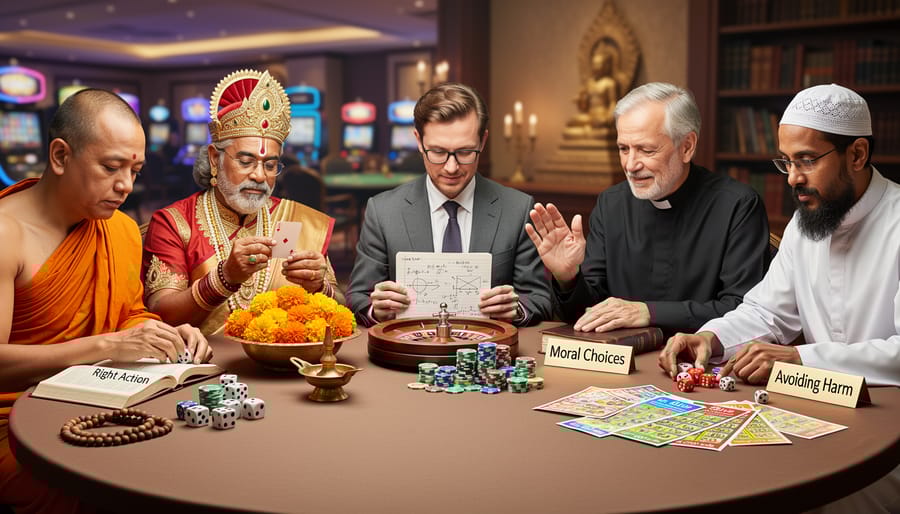
Religion and spirituality shape how many Canadians approach games of chance, creating a rich tapestry of perspectives that often require thoughtful navigation in our multicultural society. Understanding these faith-based views helps us appreciate the complex decisions individuals and families make around betting and gaming activities.
Islamic teachings generally prohibit gambling, known as “maysir,” viewing it as a practice that can harm individuals and communities. Fatima, a community liaison in Toronto, shares her family’s approach: “My parents explained that gambling conflicts with our values of hard work and trusting in God’s plan. When my friends organized a Super Bowl pool at work, I politely declined but still joined them to watch the game. It’s about staying true to my beliefs while being part of the community.” Many Muslim Canadians find creative ways to participate in social gaming activities without monetary stakes, organizing friendly competitions with symbolic prizes instead.
Within Christianity, perspectives vary widely across denominations. Some evangelical communities strongly discourage all forms of gambling, while Catholic teachings take a more nuanced stance, acknowledging that recreational betting in moderation isn’t inherently sinful but warning against excess and addiction. Pastor Michael from a multicultural church in Vancouver notes, “We focus on the principles rather than rigid rules. We talk about stewardship, responsibility to family, and avoiding activities that could lead to compulsive behavior. Some parishioners enjoy occasional lottery tickets or bingo nights, and that’s between them and God.”
Hindu and Sikh communities also express diverse views. While gambling during Diwali has traditional roots in some Hindu practices, many contemporary Hindu Canadians avoid it, focusing instead on the festival’s spiritual significance. Raj, a second-generation Canadian Sikh, explains, “My grandparents played cards during festivals back in Punjab, but my parents emphasized the Guru’s teachings about honest labor. I respect both perspectives and choose to honor the values I was raised with here in Canada.”
Buddhist principles warn against activities driven by greed and attachment, yet some Buddhist Canadians distinguish between recreational play and problematic gambling. The emphasis remains on mindfulness and understanding one’s intentions and limitations.
Jewish teachings offer varied interpretations, with some rabbinical opinions permitting games of chance when properly regulated and others expressing concern about the ethics of winning money without productive labor. These discussions often happen within families and communities, reflecting Judaism’s tradition of thoughtful debate.
What emerges across these faith traditions is a common thread: concern for family wellbeing, community harmony, and personal integrity. Many Canadians honor their religious teachings not through judgment of others but through personal choices that align with their values while respecting that others may interpret their own traditions differently.
Cultural Values Around Money and Entertainment
Beyond religious teachings, cultures worldwide have developed distinct attitudes toward risk, entertainment, and the role of chance in daily life. These perspectives shape how different communities in Canada approach games and betting, often in ways that might surprise us.
In many Asian communities, the concept of luck carries particular cultural weight. For families with roots in China, Vietnam, or Korea, games of chance aren’t just entertainment—they’re woven into celebrations and social gatherings. Mahjong nights during Lunar New Year or card games at family reunions serve as opportunities for connection rather than purely financial ventures. However, these same communities often emphasize practical wisdom about knowing when to stop, captured in sayings passed down through generations about the dangers of chasing losses.
Northern European cultures traditionally view risk-taking through a different lens. Scandinavian-Canadians often share stories of how their families approached entertainment spending with characteristic restraint, seeing calculated risks as acceptable within strict personal budgets. The concept of “lagom”—having just the right amount—extends to how Swedish-Canadian families might set aside a modest entertainment fund for occasional lottery tickets or bingo nights, without letting it dominate finances.
Meanwhile, many Latin American communities celebrate spontaneity and communal joy in their approach to entertainment. A Colombian-Canadian community leader in Toronto shared how neighborhood lottery pools bring people together, transforming individual risk into shared excitement. The focus remains on the social experience rather than potential winnings, with participants often reinvesting any small wins into community celebrations.
Indigenous communities across Canada have their own traditional games involving chance and skill, from hand games to dice games, historically played for enjoyment and social bonding rather than profit. Modern Indigenous perspectives on commercial gambling often emphasize balance and respecting traditional values around community responsibility.
What emerges from these diverse perspectives is a common thread: most cultures recognize both the entertainment value and the potential pitfalls of games of chance, developing their own guardrails rooted in cultural wisdom rather than formal restrictions.
Community Gathering or Solitary Activity? Social Dimensions of Betting
The Social Fabric: Betting as Connection
In a bustling Toronto café during the 2022 FIFA World Cup, Maria from Portugal and Ahmed from Morocco discovered they had more in common than their mutual love of soccer. Both had organized betting pools in their respective communities, bringing together dozens of families who might not otherwise connect. When Portugal faced Morocco in the quarterfinals, their friendly rivalry became the talk of their shared apartment building, with neighbours placing small wagers and gathering together to watch the match. The game became secondary to the laughter, shared meals, and new friendships formed that evening.
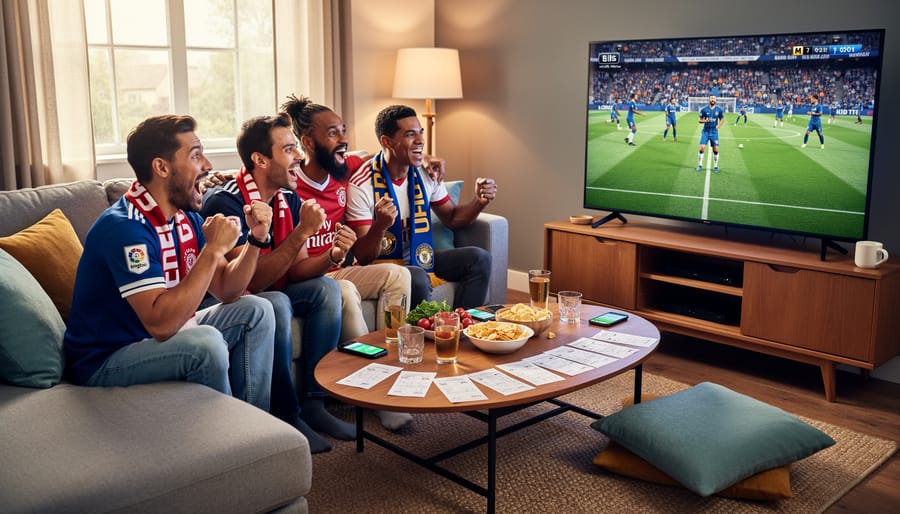
These spontaneous moments of connection happen across Canada during major sporting events. From Vancouver to Halifax, betting pools transform solitary viewing into communal celebrations. In Calgary, the Singh family runs an annual Stanley Cup playoff pool that started with ten participants fifteen years ago and now includes over sixty neighbours from various cultural backgrounds. What began as a simple way to make hockey more engaging has evolved into their community’s most anticipated social event, with families contributing modest amounts and gathering weekly to check standings, share home-cooked dishes, and cheer together.
Indigenous communities in Manitoba have embraced similar traditions around Grey Cup games, where elders and youth come together with betting squares that spark intergenerational conversations. The small stakes matter less than the stories shared between plays, the teaching moments about strategy and statistics, and the collective excitement that bridges age gaps.
These experiences remind us that betting, when approached mindfully and within means, can serve as a social catalyst. The anticipation of a shared outcome creates common ground where cultural differences fade and human connection flourishes. Whether it’s a March Madness bracket in a university dormitory bringing together international students or a backyard barbecue Super Bowl pool in suburban Ontario uniting new Canadians with longtime residents, these traditions weave threads of connection through Canada’s diverse social fabric.
Different Comfort Levels with Public Participation
Cultural backgrounds significantly shape how comfortable people feel discussing or engaging in betting activities publicly. In some communities, placing a friendly wager on a hockey game is as natural as chatting about the weather, while in others, such activities might be kept private or avoided entirely due to religious beliefs or cultural values around financial responsibility.
Maria, who moved to Toronto from the Philippines, shares that while betting on traditional games like sabong (cockfighting) was openly discussed back home, she noticed her new Canadian neighbours seemed more reserved about their online sports betting habits. Meanwhile, her colleague David grew up in a family where filling out hockey pool brackets was a beloved tradition openly shared at family gatherings.
These varying comfort levels can sometimes create barriers to social inclusion. Someone new to Canada might feel uncertain about joining workplace betting pools or sports discussions that reference odds and spreads. Conversely, individuals from cultures where gambling carries strong stigma might feel uncomfortable when betting becomes part of social bonding.
Understanding these differences helps create more inclusive environments. Community organizations and workplaces can foster belonging by offering diverse social activities beyond betting-related events, ensuring everyone feels welcomed regardless of their comfort level with gambling discussions. Respecting that some prefer to keep these activities private, while others enjoy the social aspect, strengthens our multicultural communities and ensures no one feels pressured or excluded based on their personal or cultural values around gaming and betting.
Gender and Generation: How Age and Identity Shape Betting Perspectives
Breaking Stereotypes: Women in Sports Betting
Across Canada, women from diverse cultural backgrounds are reshaping the sports betting landscape, challenging traditional assumptions about who participates in these activities. Their stories reveal how cultural attitudes are evolving and how women are claiming their space in what was once considered a predominantly male domain.
Priya, a second-generation Indian-Canadian from Toronto, shares how she started a sports betting club with friends from her university days. “Growing up, I never saw women in my family discuss betting, but my male cousins would always talk cricket odds during family gatherings,” she explains. “Now, I’m teaching my younger sister about responsible betting strategies while we watch hockey together.” Her experience reflects how younger generations are breaking away from traditional gender roles while maintaining respect for their heritage.
Similarly, Maria, who immigrated from the Philippines, discovered sports betting through her workplace lottery pool. “In my culture, women often manage household finances, so understanding probability and risk comes naturally to us,” she notes. Her perspective challenges the notion that financial decision-making in betting is somehow different from other family budget choices.
These narratives also connect to broader conversations about mental health stigma and the importance of creating inclusive spaces where women feel comfortable discussing their interests openly. As more women share their experiences, communities are recognizing that sports betting interest crosses all demographic boundaries, enriching the conversation with diverse viewpoints and approaches to responsible participation.
The Generation Gap in Gaming Culture
Across Canadian households, gaming and sports betting spark different conversations depending on who’s at the dinner table. Twenty-five-year-old Priya from Brampton recalls her grandmother’s shocked reaction when she mentioned placing a friendly bet on a hockey game through her phone. “In my grandmother’s village in Punjab, gambling was seen as something that could destroy families,” Priya explains. “But for my friends and me, it’s just part of watching the game together, like ordering pizza.”
This generation gap appears in many Canadian communities, though the specifics vary by cultural background. Marcus, a second-generation Nigerian-Canadian from Calgary, notes that his parents view betting through the lens of community responsibility. “My dad says, ‘Why would you give away money you worked for?’ But he doesn’t see it as me giving it away—I see it as entertainment, like buying a movie ticket.”
Younger Canadians often grew up with technology making betting accessible and normalized through advertising during sports broadcasts. Meanwhile, their parents and grandparents frequently carry memories from their countries of origin, where gambling might have been illegal, culturally taboo, or associated with organized crime.
What bridges this gap? Communication and respect. Many young people find middle ground by involving family in their interests. Jin-Ho from Vancouver started explaining sports analytics to his Korean-born parents, helping them understand his approach. “Now my mom asks about my ‘research’ before big games,” he laughs. “She still thinks I’m crazy, but she gets that it’s different than what she imagined.”
Responsible Gaming Through a Multicultural Lens
Cultural Barriers to Seeking Help
Despite growing awareness about problem gambling, many Canadians from diverse cultural backgrounds face unique obstacles when trying to access support. In some communities, admitting to gambling difficulties can bring shame not just to the individual, but to their entire family. Mei, a community worker in Vancouver’s Chinese-Canadian community, shares that “many people worry about losing face, so they suffer in silence rather than reach out for help.”
Language barriers compound these challenges. Support services primarily offered in English or French may feel inaccessible to newcomers who are more comfortable in their first language. Some communities lack culturally appropriate resources that understand the specific context of their gambling practices, whether related to traditional games or modern sports betting.
However, solutions are emerging across Canada. Multicultural community centers are increasingly offering peer support groups where people can discuss concerns in their preferred language. Organizations are training culturally sensitive counselors who understand that gambling behaviors exist within broader cultural contexts, not as simple moral failings.
Community leaders are also working to normalize conversations about responsible gambling. By sharing stories and creating safe spaces for dialogue, they’re breaking down stigma one conversation at a time. These grassroots efforts recognize that seeking help is a sign of strength, and that everyone deserves support tailored to their cultural needs and communication preferences.
Community-Led Approaches to Wellness
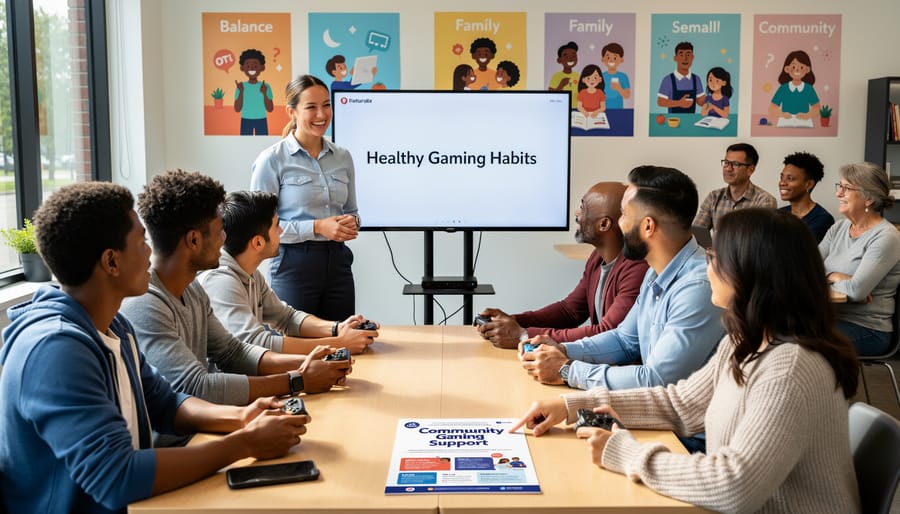
Across Canada, communities are creating their own pathways to wellness when it comes to gaming and sports betting. These grassroots initiatives recognize that healthy relationships with gaming often start with understanding, not judgment.
In Richmond, British Columbia, a Chinese-Canadian community center offers weekly gatherings where seniors share stories about traditional games of chance from their homelands while learning about responsible gaming practices in Canada. The program, run entirely by volunteers, creates a safe space where cultural traditions are respected alongside modern wellness approaches. Participants appreciate that the conversations happen in Mandarin and Cantonese, making the information truly accessible.
Indigenous communities across the country are drawing on traditional teachings about balance and moderation. A First Nations youth program in Manitoba incorporates teachings from Elders about the importance of balance in all activities, whether traditional games or contemporary sports betting. These sessions weave cultural wisdom with practical strategies, helping young people make informed choices that honor both their heritage and their wellbeing.
South Asian community organizations in the Greater Toronto Area have developed peer support networks where families can discuss gaming concerns openly, free from shame or stigma. These initiatives acknowledge that sports betting is part of many cultural traditions while providing resources in Punjabi, Hindi, and Urdu for those seeking support.
What makes these community-led approaches powerful is their cultural authenticity. They’re designed by people who understand the nuances of their communities, creating trust and genuine connections that generic programs often miss.
Building Inclusive Spaces: What the Future Holds
The path forward for gaming and betting in Canada lies in creating spaces where every community feels seen, heard, and respected. This isn’t just about translation services or multicultural advertising—it’s about fundamentally rethinking how the industry, regulators, and communities can work together to build environments that honour cultural diversity while keeping everyone safe.
Imagine walking into a gaming venue where staff members understand that eye contact means different things in different cultures, where signage reflects the visual languages of the neighbourhood, and where support services recognize that asking for help looks different depending on your cultural background. These details matter because they signal to everyone that they belong.
Several promising initiatives are already taking root. Some provinces are partnering with cultural community organizations to develop education programs that respect traditional values while providing accurate information about gaming realities in Canada. Indigenous communities are exploring ways to integrate traditional teachings about balance and moderation into contemporary responsible gambling frameworks. Settlement agencies are including practical information about Canadian gaming laws and cultural differences in their newcomer orientation programs.
Technology offers exciting possibilities too. Apps and online platforms can provide culturally adapted content, connecting users with support in their preferred languages and formats. Virtual reality could create safe spaces for intercultural dialogue about gaming practices, allowing people to share their perspectives and learn from one another without judgment.
Moving forward, success depends on genuine collaboration. Regulators need ongoing input from diverse communities. Gaming operators must invest in cultural competency training that goes beyond surface-level awareness. Communities themselves need resources to lead conversations about gaming within their own cultural contexts. And researchers must include diverse voices in studies about gaming behaviour and harm prevention.
The future of gaming and betting in Canada should reflect the country’s multicultural identity—inclusive, respectful, and built on genuine understanding across cultures.
As we’ve explored throughout this journey, Canada’s multicultural landscape offers us something truly remarkable: the opportunity to understand gaming and sports betting through countless cultural lenses. From the Chinese-Canadian grandmother who sees mahjong as a cherished connection to heritage, to the newcomer from Brazil sharing stories of football lottery traditions, to the Indigenous youth reclaiming traditional games while navigating modern betting spaces, each perspective adds depth to our collective understanding.
The conversations happening in community centers, around dinner tables, and in multicultural spaces across Canada demonstrate that we’re already building those bridges of understanding. When a Punjabi-Canadian father explains his concerns about sports betting apps to his son by sharing stories from his own upbringing, or when a Filipino community group discusses responsible gaming while organizing their charity raffle, these are moments of cultural wisdom being passed forward and adapted for Canadian life.
What makes Canada’s approach so valuable is our willingness to hold space for complexity. We recognize that gaming and betting mean different things to different communities, that celebration and caution can coexist, and that respect for diverse viewpoints strengthens rather than divides us. The Italian-Canadian community’s approach to lottery traditions, the Caribbean-Canadian perspective on dominoes as both game and gathering, the South Asian community’s nuanced views on cricket betting – each tradition teaches us something about balance, community, and cultural values.
Moving forward, the key lies in continuing these conversations with openness and curiosity. When we listen to each other’s stories without judgment, when we seek to understand rather than assume, we create a Canada where everyone’s voice matters. This isn’t just about gaming or betting; it’s about building a society where cultural differences are celebrated as strengths and where shared understanding creates stronger communities.
Canada’s multicultural tapestry is our greatest asset in navigating these complex topics together, with wisdom, respect, and hope for our collective future.





+ There are no comments
Add yours