
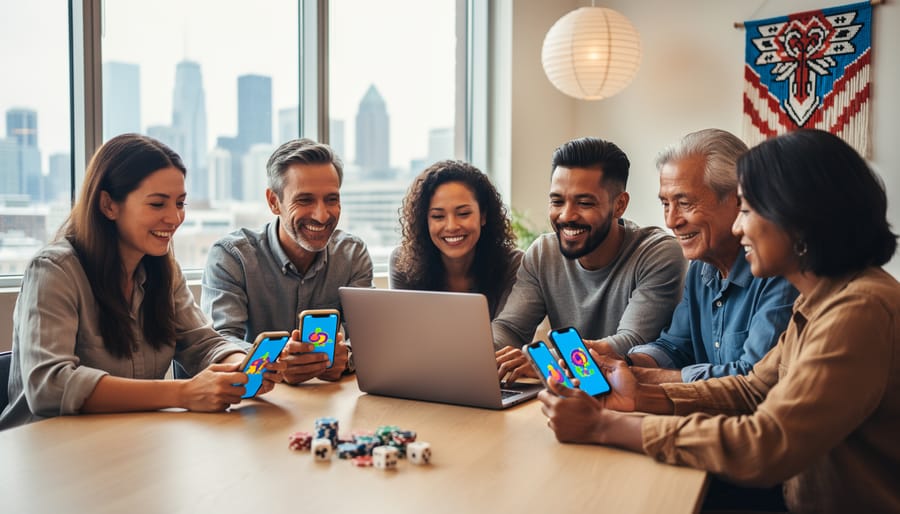
Canada’s digital gambling landscape reflects the vibrant mosaic of our nation, where countless cultural traditions intersect with modern technology. From Chinese-Canadian communities gathering online during Lunar New Year celebrations to South Asian families navigating religious teachings about games of chance, our diverse populations experience online gambling through distinctly different cultural lenses.
The rise of accessible platforms, including those with no id required, has transformed how Canadians engage with betting activities, making it crucial to understand these varied perspectives. For some newcomer communities, online gambling represents familiar social entertainment from their homelands, while others view it through frameworks shaped by faith-based values or collective approaches to family finances.
This exploration moves beyond statistics to share authentic stories from across Canada’s cultural communities. You’ll hear from a Filipino-Canadian grandmother who uses online bingo to stay connected with friends overseas, a Muslim community leader addressing halal questions around gaming, and Indigenous voices discussing how traditional attitudes toward risk and reward inform modern gambling choices.
Understanding these multicultural perspectives isn’t just an academic exercise. Community organizations, educators, and support services need culturally responsive approaches to address both the social benefits and potential harms of online gambling. When a Punjabi-speaking senior needs help with gambling concerns, generic English resources often miss the mark. When Korean-Canadian youth navigate peer pressure around betting apps, cultural context matters deeply.
By centering diverse voices and experiences, we can build more inclusive support systems, celebrate the positive role gambling plays in some cultural traditions, and address challenges in ways that respect each community’s unique values and worldviews.
The Digital Shift: How Online Gambling Became Part of Canadian Life
Just a decade ago, placing a bet in Canada meant visiting a physical casino, buying a lottery ticket at the corner store, or gathering with friends for a weekly poker game. Today, the story looks quite different. Online gambling has woven itself into the fabric of everyday Canadian life, transforming how people across the country engage with gaming and entertainment.
The numbers tell a compelling story. Between 2019 and 2023, online gambling participation in Canada nearly doubled, with millions of Canadians now accessing casino games, sports betting, and poker from their phones and computers. What was once a niche activity has become mainstream, supported by a patchwork of provincial regulations that vary from British Columbia to Ontario to Quebec. Each province approaches online gambling differently, creating a unique landscape that reflects Canada’s federated approach to regulation.
The COVID-19 pandemic served as an unexpected catalyst for this digital transformation. When physical casinos closed their doors and community gathering spaces became off-limits, many Canadians turned to online platforms for entertainment and social connection. For some, it offered a temporary escape during stressful times. For others, it became a new habit that continued long after restrictions lifted.
This shift matters profoundly for Canada’s multicultural communities. Newcomers from countries where gambling carries different cultural meanings suddenly found themselves navigating an environment where online betting ads appear during hockey games and lottery apps populate smartphone screens. Families from traditions that discourage or prohibit gambling faced new conversations with children exposed to gaming promotions. Meanwhile, communities with rich gaming traditions discovered both opportunities and challenges in the digital space.
Understanding how different cultural communities experience this digital shift is no longer optional—it’s essential. As online gambling becomes more accessible and socially normalized, recognizing diverse perspectives helps create supportive environments where everyone can make informed choices that align with their values and protect their wellbeing.

Cultural Lenses: How Heritage Shapes Views on Gambling
Eastern Asian Communities: Tradition Meets Technology
For many Asian Canadian communities, online gambling represents a fascinating intersection where ancient cultural beliefs about luck and fortune meet modern digital platforms. Traditional concepts like the Chinese philosophy of feng shui and auspicious numbers, or the Korean understanding of sa-ju (fortune-telling through birth dates), often influence how community members approach games of chance in virtual spaces.
Mei Chen, a community worker in Vancouver’s Chinatown, shares how her elderly clients view online platforms differently than younger generations. “My grandmother believes certain days are luckier for playing mahjong-style games online. She checks the lunar calendar before logging in,” Mei explains. This blending of tradition with technology showcases how cultural practices adapt rather than disappear.
Vietnamese Canadian communities often emphasize the social aspect of gambling traditions, which online platforms can both fulfill and complicate. Family poker games during Tet celebrations have moved online for some families separated by distance, maintaining connection while raising questions about appropriate boundaries.
Community leaders emphasize the importance of understanding these nuanced cultural perspectives when addressing gambling concerns. Rather than viewing all gambling through a single lens, they advocate for culturally informed approaches that respect traditional views on luck and fortune while promoting healthy practices. Educational programs developed with community input prove most effective, acknowledging that for many Asian Canadians, the conversation around gambling involves balancing cultural heritage with responsible participation in an increasingly digital world.
Indigenous Perspectives: Sovereignty and Community Impact
For First Nations, Métis, and Inuit communities across Canada, gambling holds diverse meanings shaped by unique cultural histories and contemporary realities. Indigenous perspectives on gambling reflect both traditional practices and modern concerns about community wellbeing.
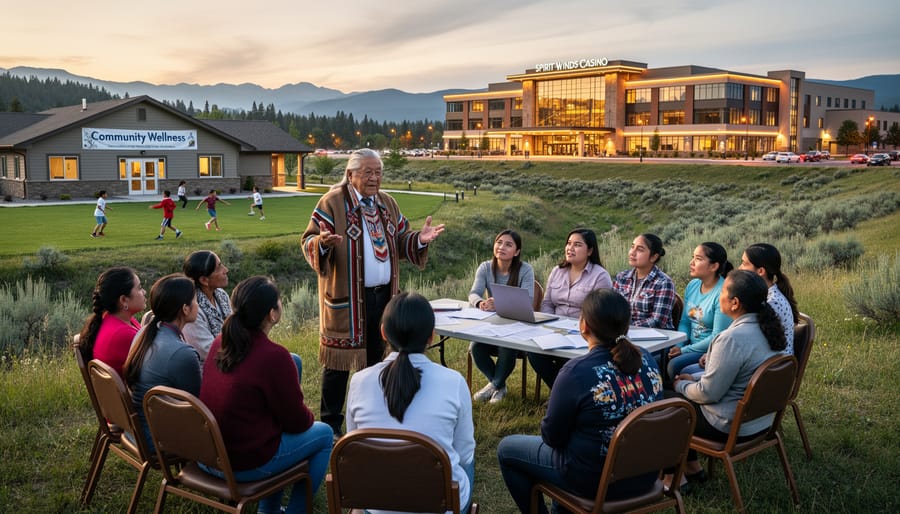
Many Indigenous communities have established land-based casinos on their territories, viewing them as tools for economic development and self-determination. These venues create employment opportunities and generate revenue that supports community programs, education, and infrastructure. Some elders share that traditional games of chance existed long before colonization, though they served different social purposes than today’s commercial gambling.
However, the rise of online gambling presents new challenges. Community leaders express concerns about accessibility and the lack of built-in social supports that physical casinos can provide. Mary, a Cree community wellness coordinator from Northern Ontario, explains that online platforms make it harder to notice when someone is struggling. “In our community centers, we can see each other, check in, and offer support. Online gambling happens in isolation.”
Youth engagement with online gambling particularly worries many families. Without the face-to-face interactions and community oversight present in land-based venues, young people may be more vulnerable to developing problematic gambling habits. Some communities are developing culturally grounded prevention programs that incorporate traditional teachings about balance and respect while addressing modern gambling technologies.
South Asian and Middle Eastern Views: Religious and Family Values
For many South Asian and Middle Eastern Canadians, religious teachings play a central role in shaping attitudes toward online gambling. These perspectives add important dimensions to Canada’s ongoing conversations about responsible gaming.
Islamic teachings clearly prohibit gambling, as it’s considered a form of maysir, or games of chance that can lead to harm. Amira, a community educator in Mississauga, shares how this shapes family discussions: “When my teenage son asked about sports betting apps his friends were using, we talked about why our faith discourages risking money this way. It’s not just about rules, but about protecting ourselves from potential addiction and financial hardship.”
Hindu perspectives vary, with many families emphasizing dharma (righteous living) and the importance of earning through honest work. Rajesh, who moved to Toronto five years ago, explains: “In my community, there’s concern that gambling can create negative karma and distract from spiritual growth. We encourage younger generations to find entertainment that builds rather than depletes.”
Sikh values similarly stress honest labor and community service. Harpreet, a youth mentor in Surrey, notes: “Our gurdwara discussions focus on how gambling contradicts the principle of kirat karni, earning through hard work. But we also recognize young people face these choices daily, so we create supportive spaces for open conversation.”
These communities often navigate between traditional values and Canadian social norms, finding ways to honor their beliefs while understanding the broader cultural landscape their children encounter.
Real Stories: Canadians Share Their Experiences
When we asked Canadians from different backgrounds to share their experiences with online gambling, what emerged was a rich tapestry of perspectives that reveals just how personal and culturally shaped our relationship with gaming can be.
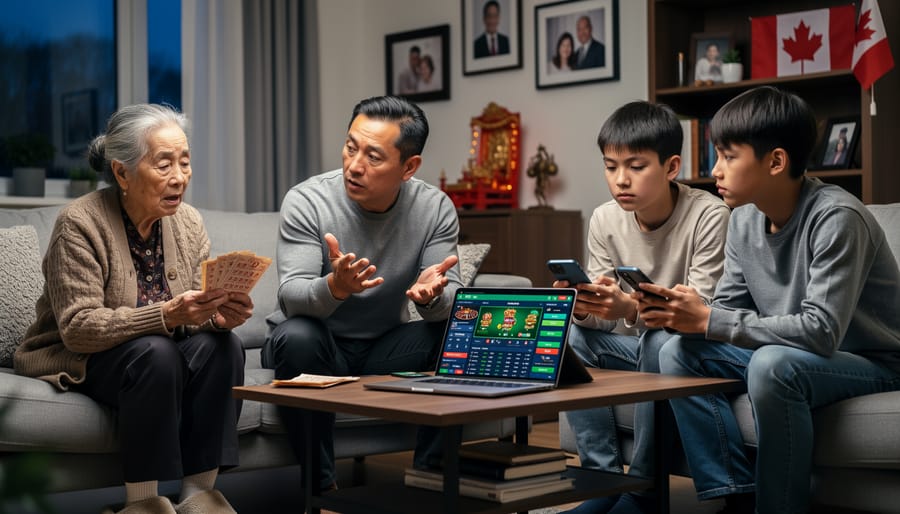
Maria, who moved to Toronto from the Philippines fifteen years ago, remembers the shock she felt when she first encountered online gambling advertisements. “Back home, we played cards during family gatherings, but it was always face-to-face, always social,” she explains. “When I saw how easy it was to gamble alone on a phone here, I worried about my teenage son. We had to have conversations we never expected to have.” Maria’s family now has regular check-ins about screen time and online activities, something that has brought them closer together despite initial discomfort.
For Rajesh, a community leader in Calgary’s South Asian community, the conversation around online gambling often intersects with broader discussions about financial wellness. “In our community centers, we’ve noticed people sometimes turn to online platforms thinking they can solve money problems quickly,” he shares. “We’ve started hosting informal gatherings where elders and younger people talk openly about the differences between recreational gaming and when it becomes concerning. The key is creating spaces where people don’t feel judged.”
Chen, a university student originally from China, offers a different perspective. “My parents were initially very strict about any form of gambling, but when I explained that some of my friends play low-stakes poker online as a hobby, we had an interesting discussion about what constitutes entertainment versus risk. It helped that I could show them the tools available to set limits and track spending.”
Indigenous community worker Sarah from Manitoba points out how important it is to understand historical context. “For many Indigenous peoples, gaming has traditional roots in our cultures, but colonization and trauma have complicated our community’s relationship with modern gambling,” she says. “We’re working to create culturally appropriate support systems that honor our traditions while addressing contemporary challenges.”
These stories highlight a common thread: communication matters. Whether it’s parents talking with children, friends checking in on each other, or community leaders facilitating discussions, openness helps bridge cultural differences and generational gaps.
What’s particularly encouraging is how many people across cultures are finding creative ways to address concerns while respecting individual choices. From families setting shared guidelines about online entertainment to community groups organizing educational workshops that welcome all questions, Canadians are building understanding together.
These narratives remind us that there’s no single “right” way to approach online gambling. Instead, each community, each family, and each individual navigates these waters differently, drawing on cultural values, personal experiences, and collective wisdom to find balance.
When Cultural Values Meet Online Accessibility
The Privacy Paradox
For many Canadians from cultural communities where gambling carries social stigma, online platforms offer something traditional casinos never could: privacy. This anonymity can be both liberating and isolating.
Maya, a third-generation Canadian whose family maintains strong ties to their South Asian heritage, shares her experience: “In my community, gambling isn’t openly discussed. Online platforms let me enjoy the occasional game without worrying about running into family friends or facing judgment.”
This privacy paradox cuts both ways. While anonymity allows individuals to make personal choices without community pressure, it can also hide problematic behaviour from the very support networks that might help. When someone struggles with gambling issues, the same privacy that once felt protective can become a barrier to seeking help.
Community leaders across Canada recognize this delicate balance. Some cultural organizations are creating confidential support spaces that respect privacy while offering guidance. These initiatives acknowledge that gambling exists within their communities without reinforcing shame or stigma.
The key lies in respecting individual autonomy while maintaining cultural connections. Online gambling’s anonymity doesn’t have to mean isolation. By fostering open, judgment-free conversations about gambling within cultural communities, we can preserve privacy as a choice rather than a necessity born from fear of social consequences.
Language and Cultural Marketing
Online gambling platforms have become increasingly sophisticated in reaching Canada’s diverse communities, tailoring their messages to resonate with different cultural backgrounds and languages. Maria, who moved to Toronto from the Philippines five years ago, recalls seeing ads in Tagalog on social media that featured familiar cultural imagery and music. “It felt like they were speaking directly to me,” she shares, noting how the messaging emphasized community and family connections—values central to her culture.
These platforms often employ multilingual customer service teams and create content in Cantonese, Mandarin, Punjabi, Arabic, and other languages widely spoken across Canadian communities. Beyond simple translation, they craft culturally relevant narratives. For instance, marketing campaigns timed around Lunar New Year might emphasize luck and prosperity, while Diwali-themed promotions incorporate traditional symbols of wealth and fortune.
Community leaders express concern about this targeted approach. Raj, who works with newcomer settlement services in Vancouver, observes that advertisements sometimes exploit cultural beliefs about luck or destiny. “Newcomers may be particularly vulnerable when messaging feels culturally familiar but doesn’t include information about risks,” he explains.
Understanding these marketing strategies helps communities recognize when they’re being specifically targeted and encourages conversations about responsible gambling practices within cultural contexts. It’s about awareness without judgment, ensuring everyone can make informed choices regardless of their cultural background.
Community Leaders Speak: Supporting Diverse Populations
Across Canada, community leaders are developing innovative approaches to address online gambling concerns while respecting cultural values and traditions. Their work demonstrates how understanding cultural context makes support more effective and accessible.
At the Vietnamese Community Centre in Edmonton, Director Mai Nguyen describes their peer-support model. “We train respected community members as cultural bridges,” she explains. “When someone struggles with gambling, they’re more likely to open up to someone who speaks their language and understands the shame associated with financial difficulties in our culture.” The program includes weekly gatherings where participants share meals and stories, creating natural opportunities for conversations about gambling without formal intervention.
In Toronto’s Somali community, settlement worker Ahmed Hassan has noticed that many newcomers don’t recognize online gambling platforms as potentially problematic. “Back home, gambling wasn’t accessible the way it is here,” he notes. “We now include digital literacy sessions that specifically address online betting apps and casino advertisements.” These workshops use real examples and connect gambling risks to broader financial wellness topics that matter to families establishing themselves in Canada.
The Chinese Family Services Centre in Vancouver takes a multi-generational approach. Program coordinator Linda Chen shares, “We discovered that grandparents caring for children while parents work were sometimes gambling online out of isolation and boredom. Now our seniors’ programs include social activities and explicit discussions about healthy entertainment alternatives.” They’ve created culturally relevant materials that explain how online platforms differ from traditional community gambling, emphasizing the accelerated risks.
Indigenous community worker Jordan Blackbird from Winnipeg highlights the importance of addressing historical trauma. “For many Indigenous people, gambling issues connect to deeper wounds from colonization and displacement,” he says. “Our healing circles incorporate traditional practices alongside practical education about online gambling. We focus on rebuilding community connections that colonization disrupted.”
These leaders emphasize that one-size-fits-all approaches rarely work. Settlement agencies across Canada are now developing culturally adapted screening tools, training staff in cultural humility, and partnering with communities to create prevention materials in multiple languages. Their collective wisdom shows that effective support starts with listening, respects cultural values, and builds on existing community strengths rather than imposing external solutions.
Building Bridges: Culturally Responsive Resources and Support
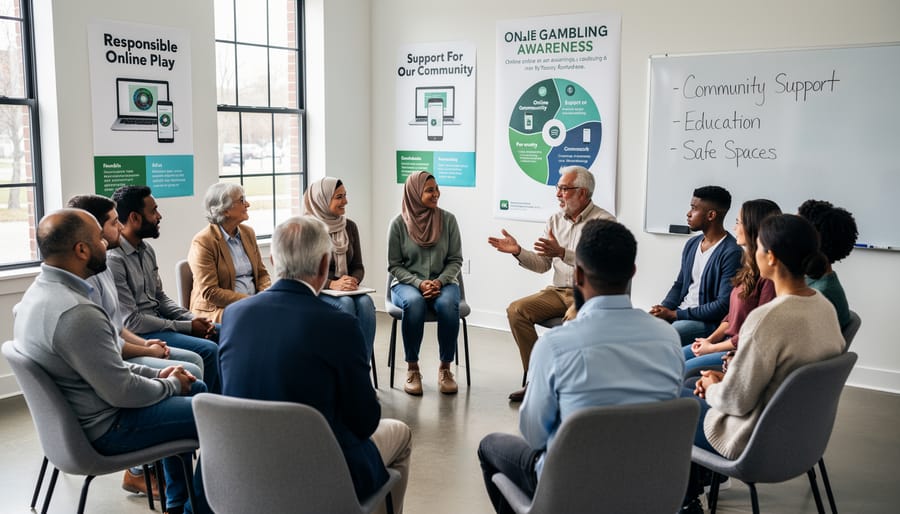
Across Canada, communities are coming together to ensure everyone has access to support when online gambling becomes a concern, regardless of the language they speak or their cultural background. These efforts recognize that seeking help looks different in every community, and effective support must honor those differences.
Organizations like the Problem Gambling Institute of Ontario now offer multilingual support services in over a dozen languages, ensuring that Mandarin, Punjabi, Arabic, and Tagalog speakers can access counseling in their mother tongue. When Maria, a Portuguese-speaking grandmother in Toronto, noticed her son spending excessive time on gambling sites, she found comfort in speaking with a counselor who understood not just her language, but also her cultural values around family responsibility.
Community-based initiatives are proving especially effective. In Vancouver’s South Asian community, peer support circles bring together families navigating similar challenges, creating safe spaces where cultural shame doesn’t prevent honest conversation. Meanwhile, Indigenous-led programs across the country incorporate traditional healing practices alongside modern counseling approaches, recognizing that recovery means different things to different people.
Faith-based organizations have also stepped forward, with mosques, temples, and churches hosting culturally sensitive workshops that address gambling concerns through familiar spiritual frameworks. These sessions acknowledge that for many newcomers, understanding Canadian gambling regulations while managing cultural expectations can feel overwhelming.
Educational programs designed specifically for youth in multicultural communities use relatable scenarios and peer educators who share similar backgrounds. In Calgary, a program developed by Filipino community leaders helps young people understand gambling risks while respecting their cultural context and family dynamics.
These bridge-building efforts demonstrate that effective support isn’t about one-size-fits-all solutions. By centering cultural understanding and offering resources that truly speak to diverse experiences, Canadian communities are ensuring that no family faces gambling concerns alone, and that help is always available in a language and format that feels right.
Understanding multicultural perspectives on online gambling isn’t just about recognizing differences—it’s about celebrating the strength that comes from our diverse viewpoints and experiences. When we listen to the stories shared by newcomers from Asia, families from the Caribbean, Indigenous communities, and all the cultural groups that make up Canada’s vibrant tapestry, we gain insights that benefit everyone.
Building inclusive communities means acknowledging that each cultural background brings unique wisdom about risk, entertainment, family values, and community well-being. The grandmother who shares her concerns about accessible gambling, the young professional navigating two cultural worlds, the community leader working to support families—these voices matter equally in shaping how we approach online gambling together.
We all share a collective responsibility to create spaces where these conversations can happen openly, without judgment or stereotyping. By embracing cultural humility and genuine curiosity about one another’s experiences, we can develop support systems and policies that truly serve everyone. The path forward isn’t about finding a single solution, but rather about continuing this dialogue with respect and openness.
When we value diverse perspectives, we’re not just addressing online gambling—we’re strengthening the very fabric of our communities. Together, through understanding and mutual support, we can ensure that all Canadians feel heard, respected, and empowered to make informed choices that honor both their cultural heritage and their well-being.





+ There are no comments
Add yours